
Cardiac Arrhythmia (Abnormal Heart Rhythm) Treatment in London
An abnormal cardiac rhythm that feels like your heart is skipping a beat, racing, or fluttering can be a sign of Arrhythmia or irregular heartbeat. Early detection and effective management can prevent serious complications.

+44 7535 984 305
What is an Irregular Heartbeat or Arrhythmia?
Arrhythmias (irregular heart rhythms) occur when your heart beats too slowly, too fast, or irregularly. It can be harmless, serious, or even life-threatening depending on the type and severity of the condition. Chronic or untreated cardiac arrhythmias may also cause long-term complications, such as cardiomyopathy, stroke, or heart attack.
What Causes an Abnormal Heartbeat?
Cardiac Arrhythmia occurs when the electrical signals that control the heartbeat become disrupted or uncoordinated. These irregularities in heart rhythm can be caused by various factors, such as:
Coronary Heart Disease
Reduced blood flow due to blocked arteries can disrupt the heart’s electrical impulses, resulting in an irregular heartbeat.
Cardiomyopathy
Thickening of the heart muscles or cardiomyopathy affects the heart’s ability to pump blood efficiently, which can cause cardiac rhythm abnormalities.
Heart Valve Disorders
Defects or improper functioning of one or more of the heart valves can disrupt the normal blood flow, leading to irregularities in the conduction system and cardiac rhythms.
High Blood Pressure
Chronic hypertension forces the heart to work harder, causing the heart muscles to thicken and increasing the risk of developing arrhythmias over time
Heart Attack
A heart attack damages the cardiac muscle and electrical pathways, often triggering uneven heartbeats in the long run.
Thyroid Disorders
Both overactive and underactive thyroid glands can disturb the heart’s rhythm by interfering with cardiac impulses.
Stress
Stress causes an irregular heartbeat by stimulating the body’s ‘fight-or-flight’ response, which can lead to palpitations or a faster heart rate.
Hereditary Factors
Inherited heart rhythm disorders, such as Long QT Syndrome, CPVT, PCCD, and Brugada Syndrome, affect electrical conduction systems, making individuals more prone to developing arrhythmias.
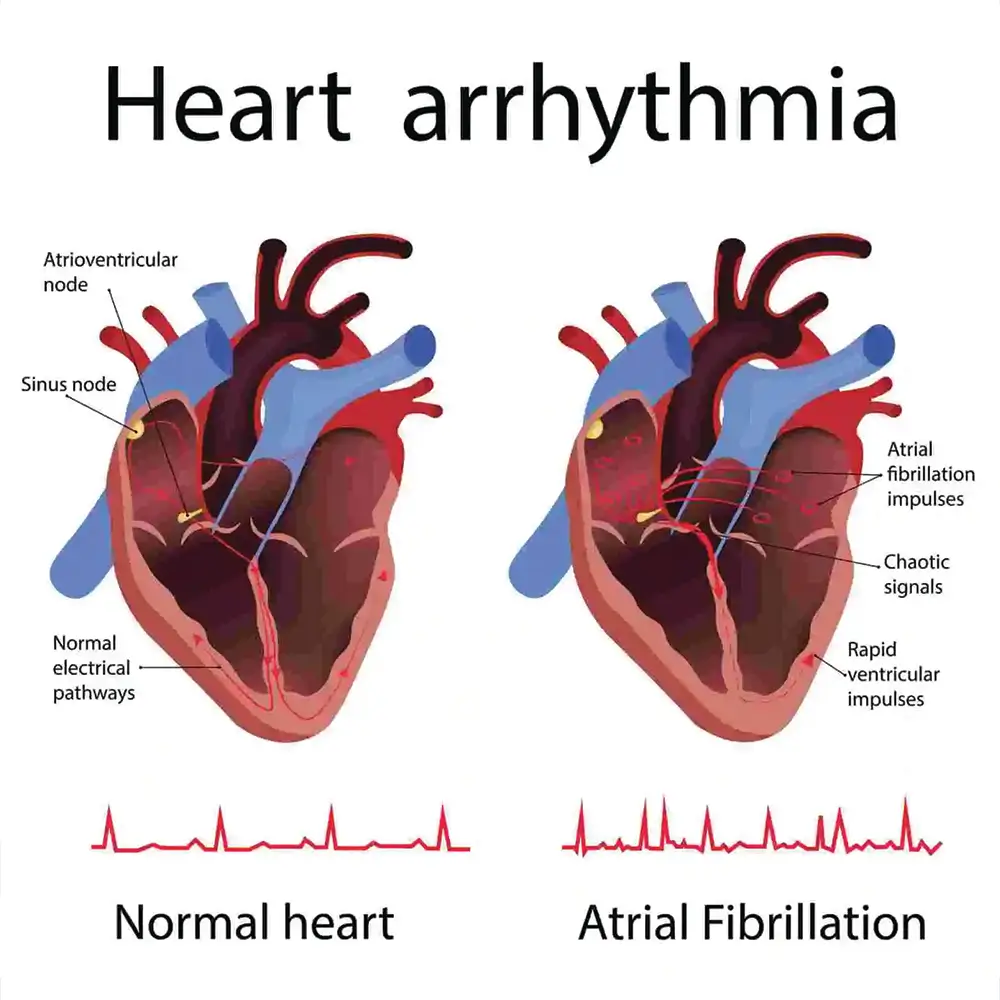
Types of Cardiac Arrhythmia
Tachcardia
A resting heart rate above 100 beats per minute (faster than normal) is known as tachycardia. This condition is further classified into different types based on the specific causes:
Atrial Fibrillation (AF or AFib): Disrupted electrical signalling in the atria increases the risk of blood clotting, stroke, or heart failure.
Atrial Flutter: A rapid and abnormal atrial rhythm (up to 300 beats/minute) caused by their quicker contraction compared to the ventricles.
Ventricular Fibrillation: Rapid, erratic electrical signals cause the ventricles to quiver instead of contracting.
Supraventricular Tachycardia (SVT): Caused by faulty electrical impulses between the upper and lower chambers of the heart.
Ventricular Tachycardia: Abnormal electrical impulses in the ventricles prevent them from filling with blood, causing serious complications.
Bradycardia
A resting heart rate below 60 beats per minute is referred to as bradycardia. It is a condition where the heart beats slower than normal, potentially leading to fatigue, dizziness, or fainting.
Conduction Block: A delay or interruption in the electrical signals between the atria and ventricles causes an irregular heart rate.
Sick Sinus Syndrome or Tachybrady Syndrome: A defect in the sinus node (the heart’s natural pacemaker) causes alternating episodes of abnormally slow and fast heartbeat.
Symptoms of Cardiac Arrhythmias
The symptoms of dysrhythmia can vary depending on the type and severity of the condition. Common symptoms include:
Our Specialists’ Diagnostic Approach to Irregular Heart Rhythm
Our arrhythmia specialists carefully review your symptoms and medical history to identify any heart rhythm concerns. Depending on your condition, you may be advised to undergo advanced screenings, such as blood tests, ECG, Echocardiogram, Electrophysiological Study (EP), Cardiac Stress Test, or an Implantable Loop Recorder to assess your heart health.
Cardiac Arrhythmia Treatment
Irregular heartbeat treatment is based on the severity and type of condition. Mild cases can often be managed through lifestyle changes, whereas more complex issues may require advanced procedures, such as catheter ablation, pacemaker implantation, or ICD implantation. At The National Heart Clinic, our clinicians provide you with personalised treatment plans to restore normal heart rhythm and prevent future complications.
Why Choose The National Heart Clinic?
At The National Heart Clinic, our patients receive exceptional cardiac care from London’s top heart specialists. We combine advanced diagnostics, personalised treatment, and compassionate care to optimise your heart health. At The National Heart Clinic, you can expect:

Book a Private Consultation Today
Book an appointment with an Arrhythmia consultant at The National Heart Clinic and get expert assessment, accurate diagnosis, and a personalised treatment plan.
Faqs
Book an Appointment Online
Schedule a consultation online with the best Harley Street Cardiologists and get access to expert opinion, efficient diagnostics, and a personalised approach to your heart care.
What Our Patients Say?
Every heartbeat tells a story! Read how our patients found hope, healing, and confidence in our cardiology health services.