
Private Echocardiogram London | Same-day Heart Scan
£490
Duration: 20-30 minutes
A private echocardiogram (heart ultrasound) at The National Heart Clinic – CQC-registered clinic on Harley Street. A painless scan that shows how your heart muscle, chambers and valves are working. Same-day appointments and Consultant-led interpretation of results within 24 hours.
What Is An Echocardiogram?
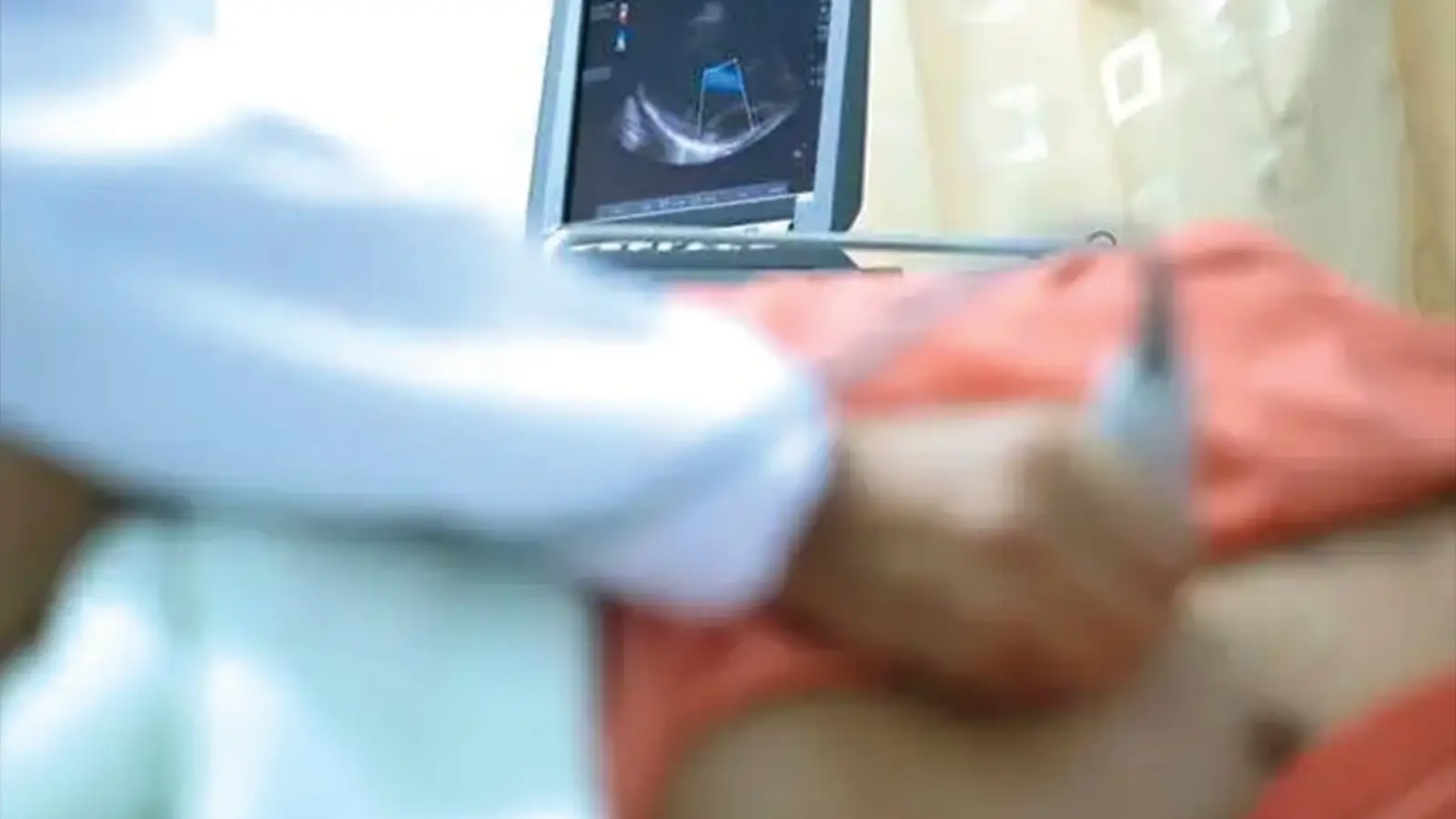
An echocardiogram test is a non-invasive cardiac ultrasound that gives a detailed view of your heart’s anatomy by creating clear images. The most common type is a Transthoracic Echocardiogram (TTE) in which a small probe with gel is moved across your chest to analyse the heart’s structure, function, and blood flow to detect any vascular or cardiac abnormalities.
What to Expect During Your Echocardiography
Preparing for Your Echocardiogram
You don’t need to make any special preparations before a standard Transthoracic echocardiogram. You can eat, drink and take your regular medication as normal unless your doctor advises otherwise.
Wear something comfortable and easy to remove from your top half, as you’ll need to undress to the waist for the scan. If you have any concerns about the procedure, let your clinical team know before the scan. The team will explain what to expect and answer any questions you may have.
What Happens During an Echocardiogram?
During the scan, you will usually be asked to undress from the waist up and lie on an examination couch, often on your left side. Small electrodes may be attached to your chest to monitor your heart rhythm during the procedure.
The sonographer applies a small amount of gel to your chest and moves a handheld ultrasound probe across different areas. The probe sends sound waves into your chest to produce moving images of your heart, allowing the clinician to analyse its chambers, valves, pumping function and blood flow.
You may be asked to change position or briefly hold your breath to help capture clear images. The procedure is painless, although you may feel slight pressure from the probe. A standard echocardiogram typically takes around 20-30 minutes.
After Your Echocardiogram
Once the scan is complete, you can usually return to your normal activities straight away. The images are reviewed to assess your heart’s structure and function, including any abnormalities that may require further investigation.
Your Echocardiogram Results and Report
Once your heart ultrasound is done, you will receive your report on the same day as your appointment. Your cardiologist will review your report and share findings with you, considering your symptoms, medical history, and overall heart health. You may be recommended further tests and treatment, where required, as part of your ongoing care.
Types of Heart Echo Scan
Transthoracic Echocardiogram
A transthoracic echocardiogram is the most common type of heart ultrasound. A sonographer moves a handheld probe over your chest to create images of your heart using sound waves. The scan helps assess the heart’s chambers, valves, pumping efficiency, and blood flow without the need for invasive procedures.
Transoesophageal Echocardiogram (TOE)
In a transoesophageal echocardiogram, a probe is passed down the oesophagus to closely evaluate the heart’s anatomy. The probe emits high-frequency sound waves and captures the returning echoes to produce detailed, high-quality images of the heart.
Bubble Echo
A specialised form of echocardiogram used to analyse the left and right sides of the heart and detect structural defects, such as an atrial septal defect (ASD) or a patent foramen ovale (PFO).
Stress Echo
A stress echocardiogram assesses how your heart performs during physical exertion. It is particularly effective in identifying coronary artery disease or reduced blood flow that may not be apparent when the heart is at rest.
Contrast Echocardiogram
The contrast echo scan involves injecting a contrast agent into the bloodstream to improve image quality, allowing detection of structural or functional heart abnormalities more easily.
Foetal Echocardiogram
The Foetal echocardiogram is used to analyse the baby’s heart during pregnancy to detect structural or rhythm abnormalities.
Why Might You Need a Heart Ultrasound?
Your doctor may recommend an echocardiogram for symptoms that suggest a heart condition. An echo scan uses sound waves to assess the structure and function of the heart.
Symptoms That May Require an Echocardiogram
You may need an echocardiogram if you experience:
Heart Conditions and Risk Factors That May Require Monitoring
Your doctor may also recommend an echocardiogram to investigate an abnormal finding or monitor an existing condition, including:
What Can an Echocardiogram Detect?
A heart echocardiogram is a vital diagnostic test that helps identify structural, functional, and congenital heart abnormalities. By detecting issues early, an echocardiogram supports timely intervention for reducing the risk of complications, such as:
Cardiomyopathy
Cardiomyopathy (Cardio-‘heart’, Myo-‘muscle’, and Pathy-‘disease’) is a set of conditions affecting the heart muscle and making it stiff. These structural defects reduce the heart’s ability to pump blood effectively. Echocardiography allows cardiologists to closely examine the heart muscle and assess the type and severity of cardiomyopathy.
Pericardial Disease
Pericardial disease occurs when fluid accumulates within the pericardium, the thin, two-layered sac surrounding the heart. This fluid build-up can increase pressure on the heart and interfere with normal function. An echocardiogram helps evaluate the pericardium and measure fluid levels to prevent future complications.
Heart Valve Disease
Narrowed, leaky, or impaired cardiac valves may cause valvular heart disease. An echocardiogram provides detailed images of valve structure and movement to assess their condition.
Endocarditis
Endocarditis is an inflammation of the endocardium, the inner lining of the heart, often caused by infection. If left untreated, it can lead to serious or life-threatening complications. An echocardiogram helps detect inflammation, valve damage, or abnormal growths, supporting early diagnosis and management.
Atrial Fibrillation
While an Electrocardiogram is usually used to detect Atrial Fibrillation (AF), an echo is often requested alongside it to detect the underlying cause, such as heart valve disease, enlarged left atrium, or impaired ventricular function.
Hypertensive Heart Disease
An echocardiogram can help identify thickening of heart muscle (left ventricular hypertrophy) caused by long-term, unmanaged high blood pressure.
Why Choose The National Heart Clinic for a Private Echocardiogram?
How Much Does a Private Echocardiogram Cost in London?
A Transthoracic Echocardiogram at The National Heart Clinic costs £490, which includes consultation with your cardiologist and a detailed discussion of your results. Results are provided within 24 hours.
Flexible Ways to Pay for Your Care
Self-Pay
Book your heart consultation and diagnostic tests directly without insurance. We offer flexible self-pay options for both initial and follow-up appointments, as well as advanced heart investigations. Payments are accepted via debit card, credit card, and PayPal, allowing you to book quickly and securely without unnecessary delays.
Private Insurance
The National Heart Clinic works with the UK’s major private health insurers, including AXA, Bupa, Aviva, and Vitality. If you are covered, your consultations, diagnostic tests, and follow-up care may be fully or partially funded depending on your policy terms. We recommend confirming coverage with your insurer before booking an appointment. Our team will guide you through the process to ensure a smooth and stress-free experience.
Book a Private Echocardiogram Near You
Book a private echocardiogram at The National Heart Clinic, with appointments available at Harley Street and Richmond. We are registered with the Care Quality Commission. We offer same-day appointments subject to availability, with results provided within 24 hours of your scan. Book your appointment online or contact us to check the next available slot.
FAQs
Book an Appointment Online
Schedule a consultation online with the best Harley Street Cardiologists and get access to expert opinion, efficient diagnostics, and a personalised approach to your heart care.
Our Clinic Locations

The National Heart Clinic, Harley Street
69 Harley Street, W1G 8QW, London
Monday to Friday 09:00-18:00
Saturday 09:00-15:00

The National Heart Clinic, Richmond
15 King St, Richmond TW9 1ND, UK
Monday to Friday 09:00-18:00
Saturday 09:00-15:00
What Our Patients Say?
Every heartbeat tells a story! Read how our patients found hope, healing, and confidence in our cardiology health services.