
Genetic Cardiomyopathy Screening London
The National Heart Clinic offers specialist-led Genetic Cardiomyopathy Screening for individuals with a family history of inherited heart muscle disease. Together, our cardiac consultants and multidisciplinary team work on a coordinated pathway, combining detailed cardiac assessment, genetic testing, and counselling to assess your heart health, diagnose cardiomyopathy, and evaluate potential inherited risks.
+44 7535 984 305
What Does Our Genetic Cardiomyopathy Screening Service Include?
Our Genetic screening pathway for cardiomyopathy focuses on your medical and family history, symptoms and individual cardiac risk factors. Your cardiac assessment may include:
Specialist Cardiologist Review
A detailed consultation to review your symptoms, medical history, previous cardiac investigations and family history of heart disease to identify potential inherited cardiac conditions and determine the most appropriate screening approach.
Cardiac Diagnostics
Cardiac diagnostics, which may include an ECG, echocardiogram, and heart MRI to evaluate the electrical activity, structure and function of your heart and identify abnormalities associated with cardiomyopathy.
CardioGeneticist Consultation
A specialist consultation with a cardiogeneticist to review your family history and assess the possibility of an inherited cardiac condition.
Family History & Risk Assessment
Review of your family history to determine who should consider further cardiac screening. Where an inherited condition is suspected or confirmed, appropriate family assessment and follow-up can be discussed.
Follow-Up and Monitoring
Following your assessment, your cardiologist may advise on further investigations, monitoring and management based on your findings and individual risk profile.
Our 7-Step Genetic Evaluation Process
Identifying Affected Family Member
Genetic evaluation begins by identifying the family member with a confirmed or suspected cardiomyopathy diagnosis.
Review of Family History
A detailed medical and family history helps identify close relatives with cardiomyopathy, inherited heart conditions or unexplained sudden cardiac death.
Pre-Test Counselling
A specialist consultation explains the purpose of genetic investigation, the possible results and their implications for the patient and family members.
Genetic Testing Where Appropriate
Where indicated, a genetic test may be recommended to investigate whether an inherited genetic variant is associated with the cardiomyopathy.
Genetic Variant Interpretation
Identified genetic variants are interpreted in the context of the patient’s condition, family history and available clinical evidence.
Results and Post-Test Counselling
The results are discussed with the patient, including their possible implications for cardiac care and other family members.
Family Screening
If a disease-causing variant is identified, our specialists recommend targeted genetic testing to relatives and specific tests, including ECG, echocardiography, and cardiac MRI.
Genetic Cardiomyopathy Screening vs Genetic Testing
Genetic cardiomyopathy screening assesses heart health and inherited risk through a review of personal and family history, specialist cardiac consultation and investigations such as ECG, echocardiography, and heart MRI.
Genetic testing, on the other hand, involves analysing a person’s DNA to identify genetic variants associated with cardiomyopathy. Where a disease-causing variant is identified, family members may need targeted testing, known as cascade genetic testing.
Who Should Consider This Screening?
Genetic cardiomyopathy screening may be suitable for individuals who have a family history of cardiomyopathy or sudden cardiac death and have a known or suspected inherited heart muscle disease. You can get this screening if:
Once a genetic variant is identified within your family, all first-degree relatives should consider Cardiomyopathy screening and counselling for that specific variant. It can also be important even when you feel well, as some inherited cardiac conditions may not cause symptoms during their early stages.

Conditions We Assess Via Genetic Cardiomyopathy Screening
Our comprehensive screening pathway focuses on inherited heart muscle conditions and associated cardiac risks, including:
Hypertrophic Cardiomyopathy (HCM)
A condition characterised by abnormal thickening of the heart muscle, which can affect how effectively the heart pumps blood. It is one of the most common inherited cardiomyopathies.
Dilated Cardiomyopathy (DCM)
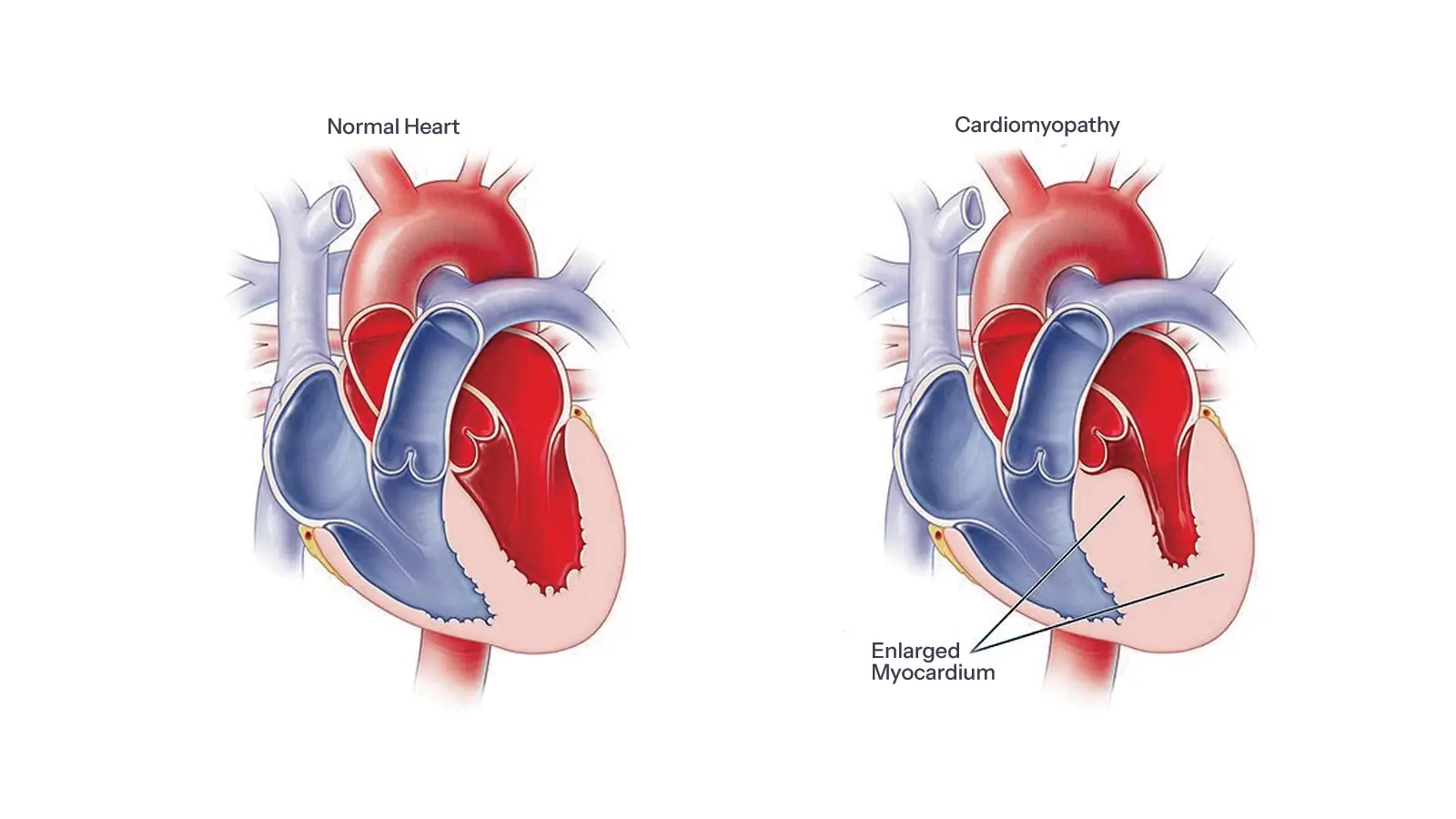
A condition in which the heart chambers become enlarged, potentially reducing the heart’s ability to pump blood efficiently. Some forms have an inherited genetic cause.
Arrhythmogenic Cardiomyopathy (ACM)
A rare inherited heart muscle condition associated with structural abnormalities. The cells in the heart muscle don’t stick together properly, affecting the heart’s pumping efficiency.
Non-Dilated Left Ventricular Cardiomyopathy (NDLVC)
A form of cardiomyopathy involving abnormalities of the left ventricular heart muscle without the typical enlargement associated with dilated cardiomyopathy.
Other Inherited Cardiac Conditions
Assessment may also be relevant for individuals with a family history of inherited arrhythmia syndromes or unexplained sudden cardiac death.
Why Choose The National Heart Clinic?
Consultant-led Cardiology Expertise
Comprehensive Cardiac Evaluation
Family-focused Assessment
Personalised Care
Meet Our Specialists
Dr. Teresa Castiello
MD, FRCP, FHFA
GMC: 7071271
Consultant Cardiologist and CEO & Founder of MIAL Healthcare
Clinical Specialties: Heart Failure, Acquired and Inherited Cardiomyopathies

Our Clinic Locations
The National Heart Clinic operates from two convenient UK locations: Harley Street, London and King Street, Richmond. Both clinics offer consultant-led heart care, with same-day appointments and diagnostic tests.

The National Heart Clinic, Harley Street
69 Harley Street, W1G 8QW, London
Monday to Friday 09:00-18:00
Saturday 09:00-15:00

The National Heart Clinic, Richmond
15 King St, Richmond TW9 1ND, UK
Monday to Friday 09:00-18:00
Saturday 09:00-15:00
What Our Patients Say?
Every heartbeat tells a story! Read how our patients found hope, healing, and confidence in our cardiology health services.
Book an Appointment Online
Schedule a consultation online with the best Harley Street Cardiologists and get access to expert opinion, efficient diagnostics, and a personalised approach to your heart care.
Get in Touch
Take the first step toward your better cardiac care. Schedule your private consultation with the best private cardiologists in London today and get the expert care your heart deserves.