
Atrial Flutter: Causes, Diagnosis, and Treatment
Atrial Flutter is a type of arrhythmia caused by abnormal electrical activity in the upper chambers of the heart. Timely assessment and treatment is essential to reduce the risk of cardiovascular complications, including stroke, heart failure, and clotting.
+44 7535 984 305
What is Atrial Flutter?
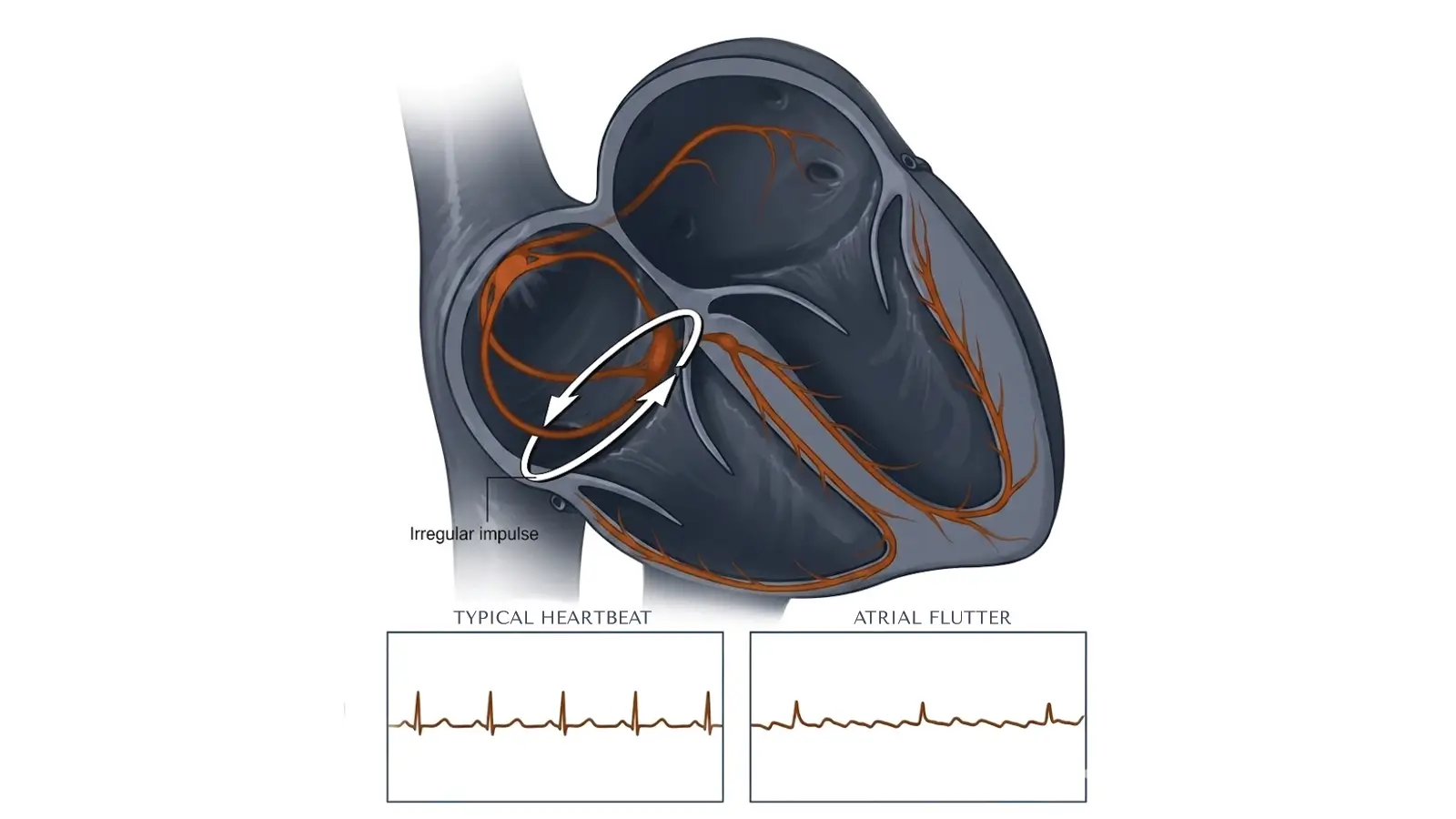
Atrial Flutter, also known as AFL, is a type of cardiac arrhythmia in which a person has an abnormally fast but consistent heartbeat. The condition is caused by electrical impulses in the heart that cause the atria (upper chambers) to beat faster than the ventricles (lower chambers). The heartbeat increases to around 300/minute instead of the normal 60-90 beats/minute.
Unlike some other heart rhythm disorders, atrial flutter produces a rapid yet organised rhythm pattern. Even so, the condition can affect blood circulation and place additional strain on the heart over time.
How is Atrial Flutter Different from Atrial Fibrillation?
Atrial Flutter and Atrial Fibrillation are closely related rhythm disorders. They may share similar symptoms and complications, but they are actually different heart conditions.
Atrial Flutter: The atria beat abnormally fast but regularly, usually around 300 times per minute.
Atrial Fibrillation: The atria beat fast and irregularly, and the rhythm becomes more chaotic.
Some patients can experience both conditions at different times, particularly those with underlying heart disease or previous cardiac procedures.
Symptoms of Atrial Flutter
What Causes Atrial Flutter?
Atrial flutter develops when abnormal electrical impulses circulate continuously within the atria. It can occur without any obvious reason in a healthy heart or may be associated with underlying cardiovascular conditions or age-related electrical changes within the heart. The condition becomes increasingly common after the age of 50.
Several medical conditions may contribute to flutter disease, including:
Types of Atrial Flutter
Typical Atrial Flutter
Around 90% of patients experience Typical Atrial Flutter. It occurs in the right atrium, where electrical signals move anticlockwise. This type of AFL often responds very well to catheter ablation and can frequently be treated with a minimally invasive outpatient procedure.
Atypical Atrial Flutter
Comparatively less common and occurs in the left atrium. The electrical pathways in atypical atrial flutter are more complex and can be treated with catheter ablation, but the procedure can be longer.
Our Specialists’ Diagnostic Approach to AFL
Atrial flutter can occur intermittently; therefore, diagnosis sometimes requires prolonged heart rhythm monitoring to capture abnormal episodes. At The National Heart Clinic, our specialists provide a comprehensive cardiac rhythm assessment using advanced diagnostic technology. Investigations may include:
Atrial Flutter Treatment in London
Lifestyle Changes
Medication
Medicines may be prescribed to:
Catheter Ablation
Catheter ablation is considered one of the most effective long-term treatments for atrial flutter. During the procedure, thin catheters are guided into the heart to target and interrupt the abnormal electrical pathway responsible for the arrhythmia.
Atrioventricular (AV) Node Ablation
In difficult-to-control arrhythmias, AV node ablation combined with pacemaker therapy is usually recommended.
Cardioversion
Cardioversion uses a carefully controlled electrical impulse to restore a normal heart rhythm. It is commonly recommended for persistent atrial flutter episodes.
When to Seek Urgent Care?
Atrial Flutter is often treatable with early diagnosis and the right treatment. However, if you experience one or more of the following symptoms, seek urgent medical advice:
Why Choose The National Heart Clinic?
Our experienced cardiology specialists provide comprehensive assessment, advanced diagnostic testing, and personalised treatment plans to ensure each patient receives the right care.
Early diagnosis and expert cardiology care can help identify the underlying cause of your symptoms and support effective long-term management.
Book a Private Consultation Today
Book an appointment with a cardiac consultant at The National Heart Clinic, Harley Street, London, and get expert assessment, accurate diagnosis, and a personalised treatment plan to manage your symptoms effectively.
FAQs
Book an Appointment Online
Schedule a consultation online with the best Harley Street Cardiologists and get access to expert opinion, efficient diagnostics, and a personalised approach to your heart care.
What Our Patients Say?
Every heartbeat tells a story! Read how our patients found hope, healing, and confidence in our cardiology health services.