Cardiac MRI Vs CT Scan: Difference Between MRI and CT?
Cardiac Magnetic Resonance Imaging (CMRI) and Cardiac Computed Tomography (CCT) are advanced, non-invasive imaging techniques used to evaluate heart structure and function in detail. While both scans provide detailed images of the heart and blood vessels, they serve different purposes and help diagnose different types of heart conditions.
Understanding the difference between cardiac MRI and a CT scan can help patients make informed decisions about which test may be most suitable for their symptoms and medical needs. In this guide, we explain MRI vs CT scan, how each heart imaging works, benefits and limitations, and when your cardiologist may recommend one over the other.
Difference Between MRI and CT Scan? All You Need to Know About Heart Imaging Tests
Understanding Cardiac MRI
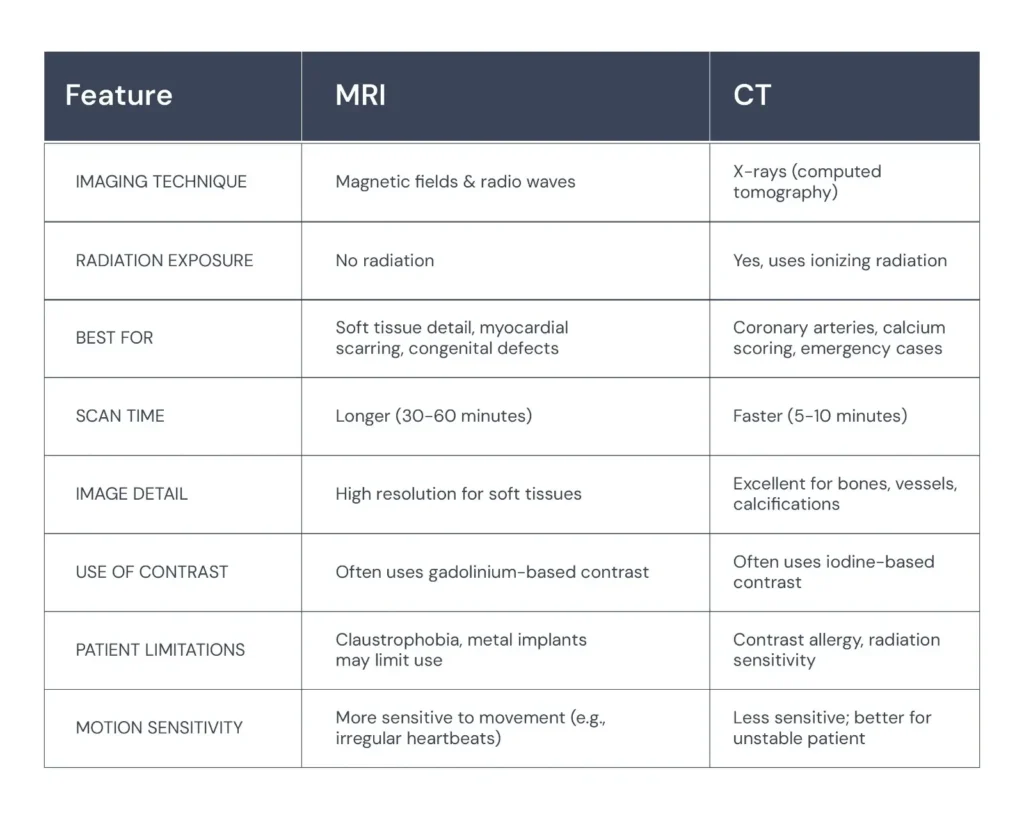
Cardiac Magnetic Resonance Imaging (CMRI) uses radio waves and magnetic fields to create detailed images of the heart. Unlike other imaging tests, MRI doesn’t use ionising radiation, which makes it a safer choice for patients on radiation therapy and pregnant women.
Purpose
A cardiac MRI provides highly detailed images of the heart’s anatomy, structure, and function. It helps doctors diagnose congenital heart disease, heart muscle damage after a heart attack, heart failure, and cardiac tumours. A cardiac MRI assesses blood flow to the heart muscles and identifies reduced supply caused by coronary artery disease.
What does a Cardiac MRI Show: Detailed Guide
Preparation
Before undergoing a cardiac MRI, it is important to inform your healthcare provider if you have any medical implants, such as a pacemaker, an Implantable Cardioverter Defibrillator (ICD), coronary stents, or a replaced heart valve. The strong magnetic field used during the scan can affect certain metal implants and medical devices. You should also let your doctor know if:
- You are pregnant.
- You have asthma or COPD.
- You have kidney disease.
Before an MRI scan, males must shave their chest to avoid rashes and discomfort due to sticky pads. In most cases, you can eat, drink, and take your regular medications as normal unless advised otherwise by your doctor. However, you may be asked to avoid caffeine for a short period before the scan.
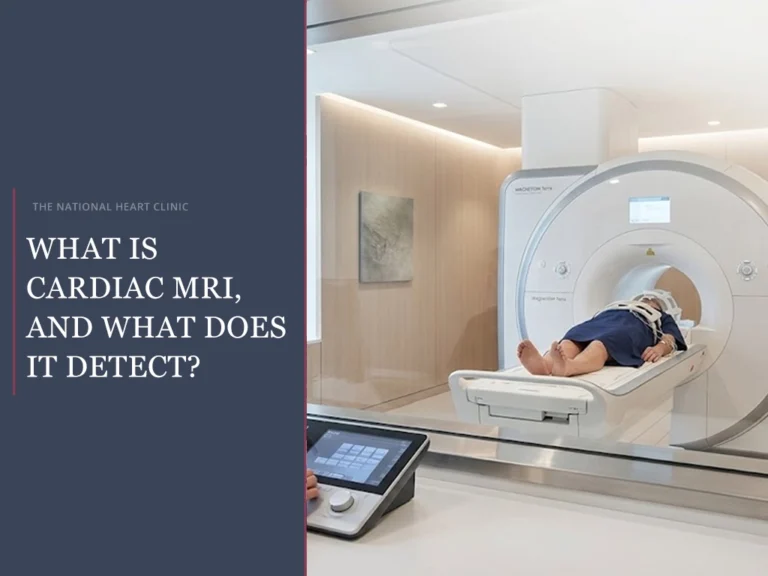
The scan usually takes around 30 minutes to an hour, depending on the type of imaging required. You will lie straight on a bed that moves inside a tunnel-shaped scanner, open at both ends. You may be asked to hold your breath for short periods while detailed images of your heart are taken. Small monitoring devices attached to your chest help capture clear images of your heart structure and function.
Advantages
- Functional Assessment of Heart: Cardiac MRI provides comprehensive insights into the heart’s functional performance, including myocardial viability, ejection fraction, and pumping efficiency. It helps doctors diagnose functional cardiac disorders and effectively manage conditions, such as heart failure.
- Detailed Structural Visualisation: Cardiac MRI produces high-resolution images of the heart’s chambers, valves, and major blood vessels. These detailed images help assess congenital heart defects, cardiomyopathies, and other structural abnormalities with high accuracy.
- Diagnosis of Complex Heart Diseases: Cardiac MRI is one of the most advanced diagnostic imaging tests for detecting complex heart conditions, such as cardiac tumours, myocarditis, and other abnormalities affecting the heart muscle and surrounding tissues.
Limitations
- Higher Cost: Cardiac MRI scans are generally more expensive than CT scans.
- Longer Scan Time: A cardiac MRI provides highly detailed images, but the scan can take around 30 to 60 minutes or longer to complete.
- Not Suitable for Some Implants: Patients with certain pacemakers, metal implants, or medical devices may not be eligible for an MRI scan, depending on the type of implant.
Understanding Cardiac CT
Purpose
A cardiac CT scan is an advanced imaging test to create detailed images of the heart and surrounding blood vessels. It helps assess the coronary arteries, heart chambers, muscles, and valves, and evaluates the thoracic aorta, abdominal aorta, and the sac surrounding the heart (pericardium). Cardiac CT is commonly used to detect narrowed arteries, calcified plaque buildup, and other structural heart abnormalities.
Preparation
Before a cardiac CT scan, you may be asked to fast for 4 to 6 hours, although you can usually continue drinking water. It is also important to avoid caffeinated drinks such as coffee, tea, and energy drinks before the procedure, as caffeine can affect your heart rate. Make sure to inform your doctor about any regular medications you take and let them know if:
- You are pregnant.
- You have an allergy to iodine or contrast dye.
- You have kidney disease.
- You are undergoing radiation therapy.
In some cases, your healthcare provider may prescribe medication before the scan to help slow down your heart rate.
For contrast CT, an IV line will be inserted into your arm to administer the contrast dye, which helps make the heart and blood vessels more visible on the scan. During the procedure, you will lie on your back on a moving bed that slides into a circular CT scanner. Small sticky electrodes will be placed on your chest and connected to an ECG monitor to track your heart’s electrical activity throughout the scan.
Advantages
- Fast and Efficient: Compared to cardiac MRI, a cardiac CT scan is much quicker, often taking around 10 minutes to complete. It is particularly useful in urgent situations or for patients who may struggle to hold their breath for extended periods.
- Detailed Coronary Artery Imaging: A cardiac CT scan provides detailed images of the coronary arteries, helping detect narrowing, blockages, and calcified plaque buildup.
- Less Restrictive: Cardiac CT scans have fewer limitations than some other imaging tests and are often suitable for patients with certain medical implants or devices that may not be compatible with MRI scans.
Limitations
- Radiation Exposure: Cardiac CT scans use ionising radiation, so they should be used carefully, particularly for patients who may require multiple scans over time.
- Contrast-Related Risks: Cardiac CT scans often require an iodinated contrast dye to produce detailed images. The contrast may not be suitable for patients with kidney disease or certain contrast allergies.
Cardiac MRI Vs CT Scan: Understanding the Differences
Choosing the Right Imaging Test: Clinical Recommendations
Both cardiac MRI and cardiac CT scans are highly effective imaging tests, but the right option depends on your symptoms, medical history, and the condition being investigated. A cardiac MRI is often recommended for detailed assessment of heart structure, muscle function, tissue damage, and complex heart conditions, whereas a CT scan is faster, more accessible, and particularly useful for evaluating coronary arteries, calcium buildup, and chest pain.
Choosing the most suitable scan should always be guided by an experienced cardiology specialist who can assess your symptoms and recommend the most accurate diagnostic approach for your heart health needs.
At The National Heart Clinic, our experienced cardiologists offer advanced cardiac imaging, including cardiac MRI and CT scans, to help diagnose heart conditions accurately. Using state-of-the-art technology and personalised care, we support patients with fast access to expert heart assessments.
Disclaimer
The information provided in this blog is for general information and educational purposes only. The content is not intended to be a substitute for professional medical advice, diagnosis, or treatment. Always seek the advice of your GP or a qualified medical professional regarding any medical condition. If you are experiencing a medical emergency, please contact emergency services immediately.