How is an ECG Performed on a Woman? What’s the Difference?
Heart health in women is often overlooked, yet it is a growing concern. According to a recent report from the British Heart Foundation, more than 4 million women in the UK are living with cardiovascular disease, and many cases remain undiagnosed until symptoms appear. It makes regular heart checks essential for early detection and ongoing cardiac health monitoring.
An electrocardiogram (ECG or EKG) is a simple but essential test that records the heart’s electrical activity and provides valuable insights into the heart’s health.
While the basic EKG procedure is the same for both men and women, small adjustments are often made in females to ensure comfort, dignity, and precision. In this guide, we explain how is an ECG performed on a woman, what to expect during the test, and key considerations and safety aspects for women.
Don’t Wait Weeks for Answers
Get fast, specialist-led heart checks with same-day or quick appointments
How is an ECG Performed on a Woman? Step-by-Step Guide
ECG Preparation Guidelines for Women
- Tie back long hair to prevent it from interfering with the EKG procedure
- Remove any jewelry or accessories to ensure accurate readings.
- Wear a comfortable, loose-fitting top, preferably with a front opening, and remove the bra from the chest if required for proper electrode placement
- Avoid applying lotions or oils to the chest, as they can prevent the electrodes from sticking properly.
Lead Placement Guidelines for Women
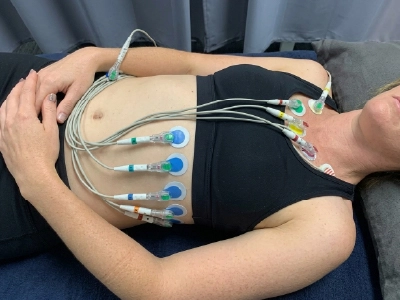
Differences in electrode placement between men and women can sometimes affect ECG accuracy and delay proper care. To avoid this, healthcare professionals should always use clear bone landmarks when placing electrodes.
Breast size and shape can make ECG lead placement more challenging in women. To ensure accurate results, electrodes may need to be positioned underneath the breast. In some cases, the technician may gently lift the breast and place the lead along the mammary crease, around the 5th intercostal space in the midclavicular line.
However, it should be done carefully, with clear communication and patient consent. Using the back of the hand to lift the breast can help minimise discomfort, maintain dignity, and ensure accurate ECG readings.
Attaching Chest Leads (V1-V6)
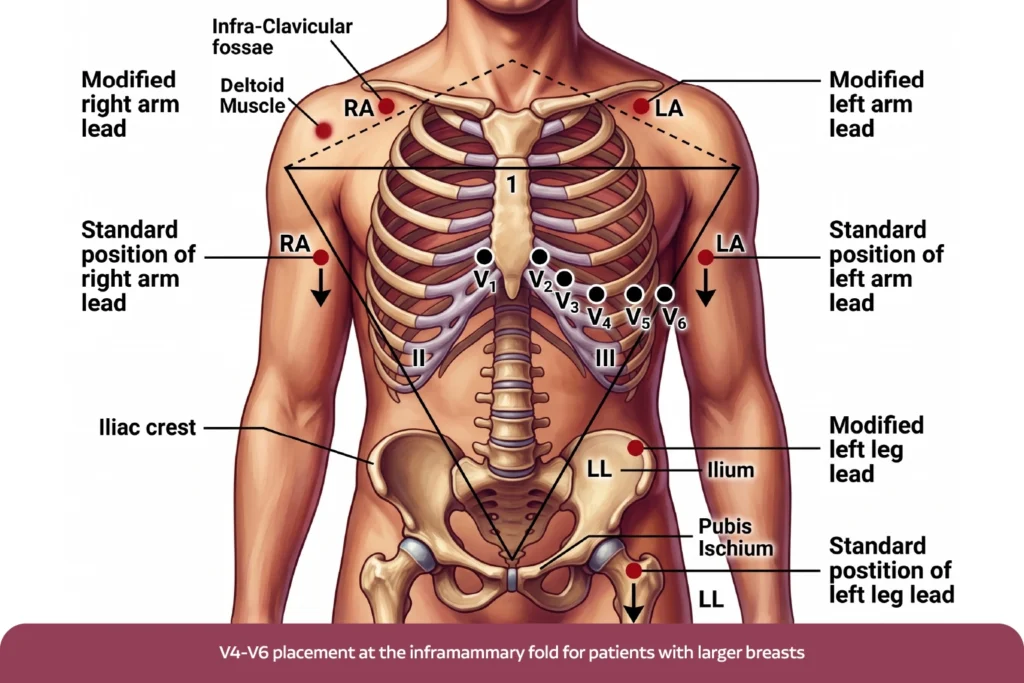
- V1: Placed at the 4th intercostal space on the right side of the sternum
- V2: Placed at the 4th intercostal space on the left side of the sternum
- V3: Positioned between V2 and V4
- V4: Located at the 5th intercostal space along the midclavicular line
- V5: Positioned along the anterior axillary line, level with V4
- V6: Placed along the midaxillary line, aligned horizontally with V4 and V5
Attaching Limb Leads
Electrodes are attached to each arm and leg, usually at the wrists and ankles.
How is an EKG Done on a Woman?
Before performing an electrocardiogram, the patient is asked to lie down comfortably on an examination couch. The technician then attaches small adhesive electrodes to specific points on the chest, arms, and legs, following standard guidelines.
In women with larger breast tissues, extra care is taken to position the chest electrodes correctly for accurate readings. Sometimes, incorrect lead placement can occur due to embarrassment. Therefore, healthcare professionals need to follow proper guidelines and clearly explain the procedure to the patient beforehand.
A recent study indicates that incorrect placement near breast tissue can affect ECG waveforms, highlighting the need for precise positioning of chest leads.
The procedure itself is quick and painless, usually taking around 10 to 15 minutes. The ECG machine records the heart’s electrical activity and produces a tracing that shows heart rhythm and function.
Once completed, the results are reviewed by a doctor, who can identify any abnormalities and advise on further tests or treatment if needed.
Book an Electrocardiogram Online
EKG in Pregnant Women
Pregnant women may need extra care during an ECG, as electrode placement can be slightly adjusted due to a different body structure. Healthcare professionals should place electrodes carefully around the abdomen to ensure comfort, maintain privacy, and achieve accurate results.
When ECG Might Not be Advisable in Women
- If a woman has a wound, infection, or severe skin rash around the chest area, electrodes might cause more irritation and discomfort.
- If a woman has an implanted device, such as a pacemaker, this may affect the test’s accuracy and lead to misinterpretation.
Conclusion
From proper preparation to correct lead placement and clear communication, this guide explains all about how an ECG is performed on a woman. If you are experiencing symptoms or simply want reassurance about your heart health, you can book a private ECG at The National Heart Clinic, located on Harley Street, London. Our experienced clinicians provide precise testing and personalised cardiac care in a professional and comfortable setting. Contact Us for more information.
Faqs
Disclaimer
The information provided in this blog is for general information and educational purposes only. The content is not intended to be a substitute for professional medical advice, diagnosis, or treatment. Always seek the advice of your GP or a qualified medical professional regarding any medical condition. If you are experiencing a medical emergency, please contact emergency services immediately.