How Accurate is an Echocardiogram to Detect a Heart Condition?
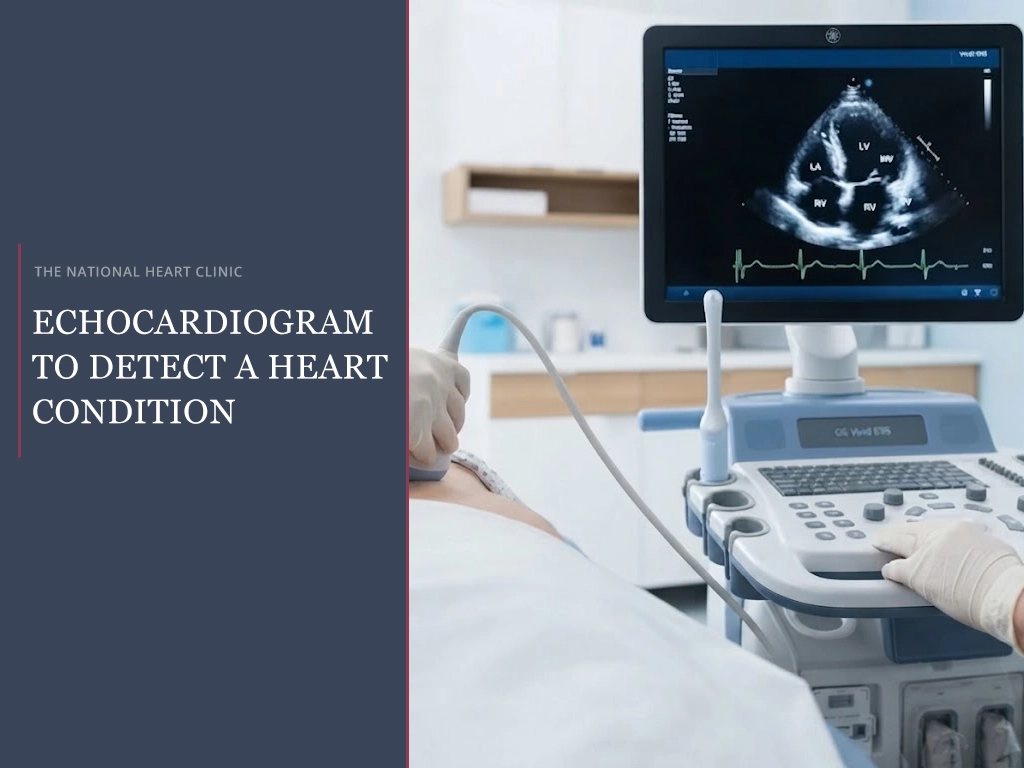
An Echocardiogram is a non-invasive imaging test that uses ultrasound to create real-time images of your heart and nearby blood vessels. A cardiologist recommends it to evaluate the heart’s structure, function, and pumping efficiency.
This test provides clear 2D and 3D views of the heart, helping doctors identify potential problems early, often before symptoms become severe.
In this blog, we will explain what a heart echo is, how it works, and how accurate is an echocardiogram in diagnosing different heart conditions to help you understand everything you need to know about this important heart test.
Don’t Wait Weeks for Answers
Get fast, specialist-led heart checks with same-day or quick appointments
When and Why an Echocardiogram is Needed?
Your doctor may recommend an Echocardiogram if you’re experiencing symptoms that could be linked to heart problems. These may include:
- Shortness of Breath
- Chest Pain or Discomfort
- Persistent Fatigue
- Dizziness or Lightheadedness
- Heart Palpitations
- Episodes of Fainting
These symptoms can sometimes be associated with conditions such as Heart Valve Disease or Heart Failure, which require timely evaluation.
You may also be advised to have regular echocardiograms if you have a family history of heart disease or an existing heart condition. It helps your doctor monitor changes in your heart’s structure or function over time and take early action if needed.
Book Your Private Heart Echo Scan
Understanding an Echocardiography Scan – How Does it Work?
An Echocardiogram works similarly to a standard ultrasound, but it focuses specifically on your heart. It uses high-frequency sound waves to create live, moving images that help doctors see your heart beating and pumping blood in real time.
It provides detailed insights into your heart health by using advanced ultrasound technology and high-frequency sound waves. These sound waves are reflected at the boundaries between different tissues, producing echoes that are detected by an ultrasound probe. The echoes are then converted into electrical signals and displayed on the ultrasound machine.
These returning echoes are captured and converted into images on a screen, giving your cardiologist a clear view of your heart’s structure and function.
What Does an Echocardiogram Show About Your Heart?
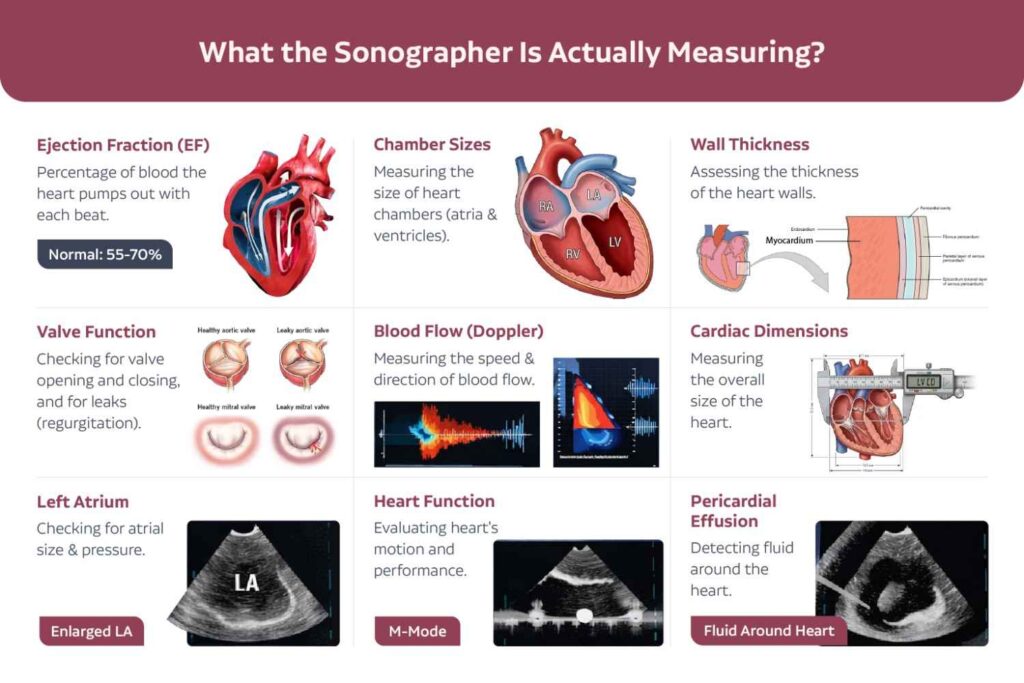
By examining these key structures, the echocardiogram helps detect abnormalities, assess blood flow, and evaluate how efficiently your heart is working. It also provides detailed insights into how blood flows through the heart valves and into the rest of the body.
Heart Structure
An echocardiogram provides accurate measurements of your heart’s size and structure, including the thickness of the heart walls and dimensions of the chambers. By identifying these changes early, your cardiologist can better assess your heart health and recommend the right treatment or monitoring plan.
Pattern of Blood Flow
An echocardiogram helps doctors clearly observe how blood moves through the heart in real time. Using advanced imaging techniques, it evaluates the direction, speed, and flow of blood through the heart chambers and valves.
Pumping Efficiency
One of the most important measurements assessed during an echo scan is the Left Ventricular Ejection Fraction, which provides information about how much blood the left ventricle pumps out with each heartbeat, giving your cardiologist a clear indication of your heart’s pumping ability and overall function.
Valvular Functions
An echocardiogram evaluates the structure and function of the 4 heart valves: the aortic, pulmonary, mitral, and tricuspid valves. It helps detect abnormalities, such as valve narrowing or leakage, which affect normal blood flow through the heart.
Risk of Future Complications
An echocardiogram helps identify early changes in heart structure and function, allowing your cardiologist to assess the risk of future complications, such as weakened heart muscles, valve problems, or abnormal blood flow. Detecting issues early can help prevent conditions from progressing and reduce the risk of serious events like heart failure or other cardiovascular complications.
How Accurate is an Echocardiogram in Detecting Heart Problems?
If you’re experiencing unusual heart-related symptoms, your cardiologist may recommend a heart echo for a more detailed evaluation. It’s natural to wonder – why not just rely on an electrocardiogram?
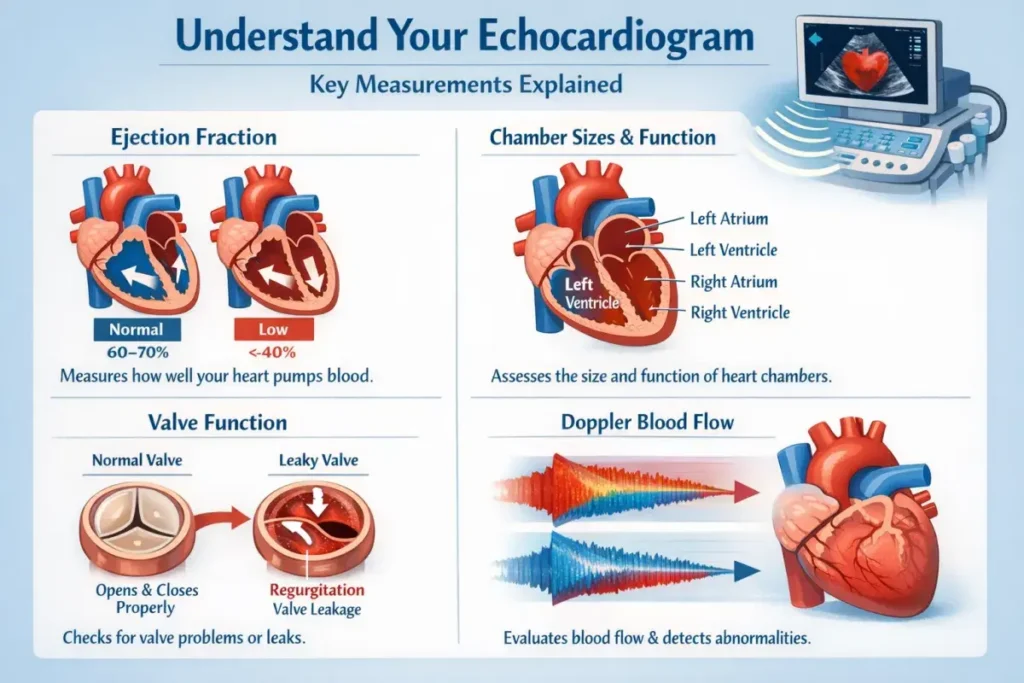
An ECG records the electrical activity and rhythm of your heart, but doesn’t show the physical structure of the heart and its pump efficiency. An echocardiogram, on the other hand, is a more advanced and comprehensive medical test that detects your heart’s structure, function, and blood flow in real time. It helps detect issues such as valve abnormalities, weakened heart muscles, and changes in pumping efficiency – things an ECG alone cannot fully evaluate.
In terms of accuracy, echocardiograms are highly reliable when performed using good-quality imaging and interpreted by experienced professionals. As with any diagnostic test, results can vary depending on image quality and the clinician’s expertise. In rare cases, misinterpretation may occur, which can lead to unnecessary follow-up tests or anxiety.
However, when performed by skilled sonographers and reviewed by an experienced cardiologist, an echocardiogram is considered one of the most accurate and reliable tools for assessing cardiac structure and function.
Does a Normal Echocardiogram Mean Your Heart is Healthy?
Many people wonder, if the echo is normal, is my heart okay? And can an echocardiogram report be wrong? Usually, a normal heart echo indicates that no major abnormalities were detected at the time of testing. Your cardiologist still considers your symptoms, medical history, and risk factors to ensure your heart is working properly. In some cases, early heart conditions may not be detected by a single test, so ongoing monitoring or additional tests may be recommended if symptoms persist.
Which Factors Can Influence Echo Scan Results?
Certain factors can affect the accuracy of an Echocardiogram by interfering with how sound waves travel through the body and reach the heart. This can sometimes make it harder to obtain clear and precise images. Common factors include chest deformities, excess fat around the heart, lung disease, and obesity.
In such cases, your Cardiologist may not get an optimal view of the heart structures. If a standard echocardiogram does not provide sufficiently clear or reliable results, your doctor may recommend a contrast-enhanced echocardiogram. This helps improve image quality and ensures a more accurate and detailed assessment of your heart health.
Seek an Expert Consultation
An Echocardiogram offers valuable insight into your heart’s health, but accurate interpretation from a specialist is essential. If you have symptoms or want reassurance, consulting an experienced Cardiologist can help you understand your results clearly. Book a private echocardiogram at The National Heart Clinic, Harley Street, London, and take the next step toward better heart care.
Disclaimer
The information provided in this blog is for general information and educational purposes only. The content is not intended to be a substitute for professional medical advice, diagnosis, or treatment. Always seek the advice of your GP or a qualified medical professional regarding any medical condition. If you are experiencing a medical emergency, please contact emergency services immediately.