ECG Vs Echocardiogram: What is the Difference?
Have you recently been referred for an ECG or an echo scan and want to understand why it is recommended, what it detects, and how it is performed? This guide covers everything you need to know about both tests – their purpose, when they’re needed, and how to choose the right diagnostic option for you.
ECG vs echocardiogram is one of the most searched terms among patients with cardiac concerns, as well as those who simply want to stay proactive about their cardiovascular health. Understanding the key differences between the two is essential to picking the right test for your heart health needs. Let’s take a detailed look!
Don’t Wait Weeks for Answers
Get fast, specialist-led heart checks with same-day or quick appointments
Electrocardiogram Vs Echocardiogram: Understanding Differences
What is an Electrocardiogram (EKG)?
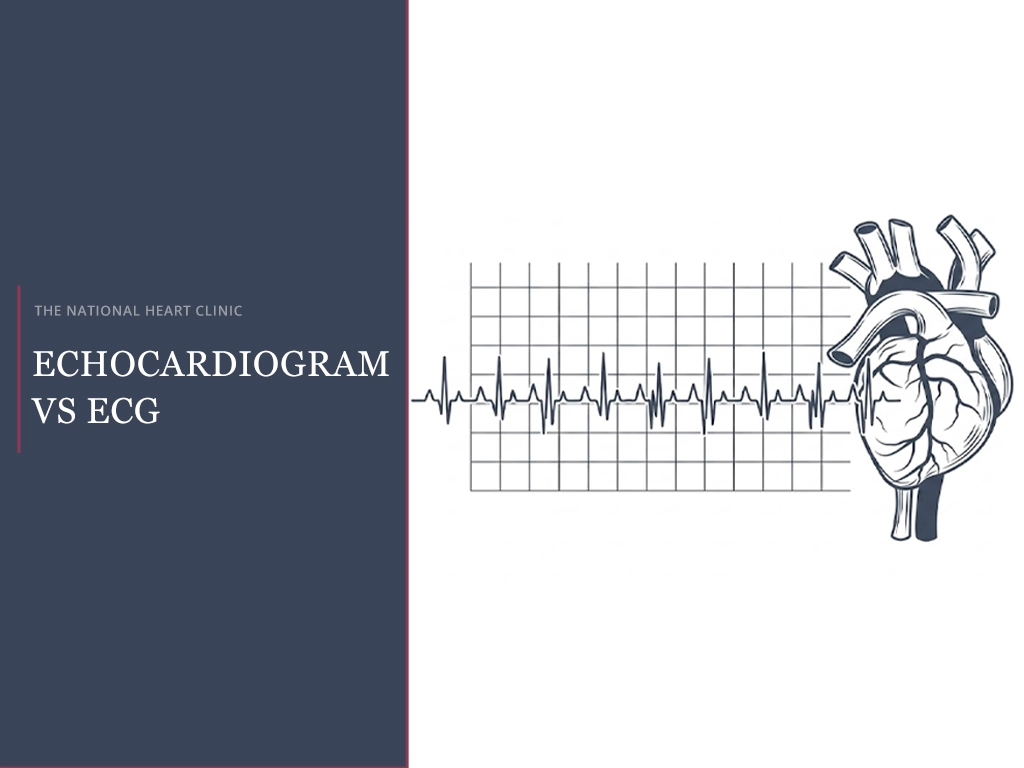
An electrocardiogram is a basic yet very effective test that records the electrical activity of your heart. Electrical signals trigger the heartbeats, and an ECG measures how well these signals travel through your heart.
What Does it Show?
An ECG test can help detect the following heart-related issues:
- Arrhythmia – an irregular heart rhythm
- Previous heart attack
- Blood flow abnormalities
- Too slow (bradycardia) or too fast (tachycardia) heart rate
What Happens During an EKG?
An ECG is a quick, painless test that takes just a few minutes. You’ll be asked to lie down on an examination couch while small sticky electrodes are placed on your chest, arms, and legs. These electrodes connect to a machine that records your heart’s electrical activity and prints a report.
At The National Heart Clinic, London, our specialists perform a comprehensive 12-lead ECG and personally review and interpret every report, providing you with clear findings and next steps.
Book your appointment today with our expert cardiologists for a fast, reliable cardiac assessment.
Are There Any Risks or Complications?
An ECG is a completely safe and non-invasive test that doesn’t involve radiation. Some patients may experience mild irritation with electrodes, but this resolves on its own shortly after the test.
At The National Heart Clinic, London, our specialists ensure your ECG is performed safely and comfortably, with clear guidance provided throughout.
What is an Echocardiogram? Everything You Need to Know
An echocardiogram is an ultrasound scan of the heart that provides real-time insights into its structure and function. Using sound waves, it creates detailed moving images that allow doctors to assess the heart’s pumping efficiency, evaluate valve function, and detect any structural abnormalities.
What Does it Show?
An echocardiogram can help cardiologists detect the following heart conditions:
- Cardiomyopathy – thickened or weakened heart muscle
- Heart Valve Disease
- Pericardial Effusion – Fluid around the heart
- Previous heart attack
- Congenital cardiac defects
What Happens During an Echo?
An echocardiogram typically takes around 20-30 minutes. It uses sound waves to create real-time moving images of your heart’s chambers, valves, and blood flow. A specialist interprets your report and shares insights based on the findings.
Are There Any Risks?
Just like an ECG, an echocardiogram is also a safe, non-invasive diagnostic test with no known risks. It uses only sound waves to create images of your heart, meaning there’s no radiation exposure, making it safe even for pregnant women and children.
ECG Vs Echocardiogram: A Quick Comparison
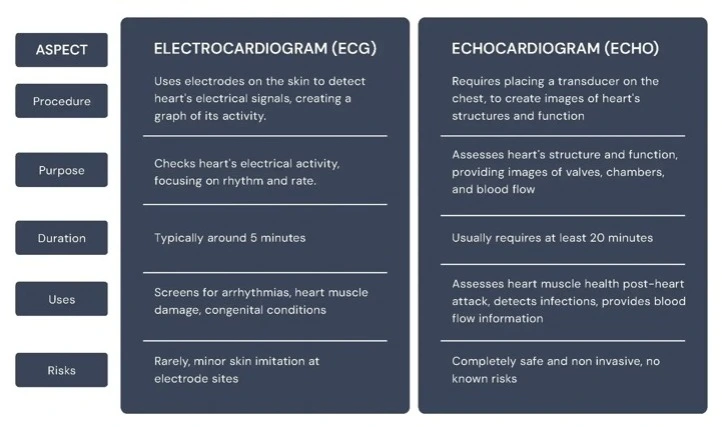
Here is a quick comparison of an electrocardiogram and an echocardiogram in terms of process, purpose, use, and duration, etc.
ECG or Echocardiography? Which Heart Test Do You Need?
You may not always need both tests, but in some cases, an ECG and an echocardiogram together provide a more comprehensive overview of your heart health. The right choice depends on your symptoms, medical history, and what your doctor suspects for a heart condition. So, instead of deciding it yourself, it’s better to consult a cardiologist for trusted advice. He will recommend the most appropriate test – or combination of tests – based on your individual health needs.
When Might Your Cardiologist Recommend These Tests?
At The National Heart Clinic, our specialists recommend an ECG or echo if you have one or more of the following symptoms:
- Palpitations
- Heart Murmurs
- Chest pain or discomfort
- Dizziness or fainting
- Shortness of breath
- Swelling in the legs or ankles
- Constantly high blood pressure
- High cholesterol levels
Conclusion
Knowing the difference between an ECG and an echocardiogram helps you understand what each test detects and which one is right for you. Whether you need one test or both, our team at The National Heart Clinic is here to guide you every step of the way. Book your test today at London’s leading cardiology clinic and access accurate, reliable results. Same-day appointments are available.
Disclaimer
The information provided in this blog is for general information and educational purposes only. The content is not intended to be a substitute for professional medical advice, diagnosis, or treatment. Always seek the advice of your GP or a qualified medical professional regarding any medical condition. If you are experiencing a medical emergency, please contact emergency services immediately.