Heart Disease Symptoms and Early Warning Signs
Do you know that around 4 million men and 3.6 million women are suffering from cardiovascular disease in the UK? Despite such a huge number, a large population ignores the early warning signs of a heart condition, such as fatigue, breathlessness, chest pain and tightness, considering them anxiety, stomach problems, or fatigue due to a high workload.
Long-term negligence and delay in treatment may lead to severe cardiovascular complications. In this guide, we have explained common heart disease symptoms, early warning signs, and how you can spot the signs of a potential heart problem.
Don’t Wait Weeks for Answers
Get fast, specialist-led heart checks with same-day or quick appointments
What is Heart Disease?
Heart disease is an umbrella term covering several distinct problems that affect your heart and blood vessels. Each condition produces a slightly different set of symptoms, even though several signs overlap across all of them.
Heart disease can be associated with irregular heartbeat, called arrhythmia, congenital heart defects, disease of the heart muscle, or valve disorders. Early diagnosis and prompt treatment can help prevent various cardiovascular conditions and optimise cardiac health.
Types of Heart Disease
Arrhythmias
An arrhythmia is an abnormal heart rhythm disorder that disrupts the coordinated beating of your heart. According to the British Heart Foundation, more than 1.5 million people in the UK are diagnosed with a heart rhythm condition, which is an estimated 50% rise in a decade.
Coronary Heart Disease (CHD)
CHD is a heart condition where the heart’s blood vessels become narrow due to the buildup of fatty deposits. It is the most common cause of disability and death in the UK. Around 90,000 deaths in the United Kingdom are caused by CHD – 1 in 5 men and 1 in 7 women.
Heart Valve Disease
The problems associated with heart valves, such as narrowing or leaking of the valves, that cause interruption in the normal blood flow.
Learn More About Heart Valve Disease
Cardiomyopathy
Cardiomyopathy is the stiffness or thickening of the heart muscle that affects its ability to pump blood. It is a rare heart condition that affects around 270,000 people in the UK, which is around 1 in 250 people.
Heart Failure
Heart failure is a serious condition where the heart muscle doesn’t pump blood as effectively as it should to meet the body’s needs. However, despite its name, it doesn’t mean the heart has stopped working. Instead, it becomes too weak or stiff to pump blood properly throughout the body.
Congenital Heart Defects
Congenital heart defects are cardiac problems or diseases present from birth. These are structural problems in the heart that occur when the fetal heart or blood vessels fail to develop normally in the womb.
Common Symptoms of Heart Disease
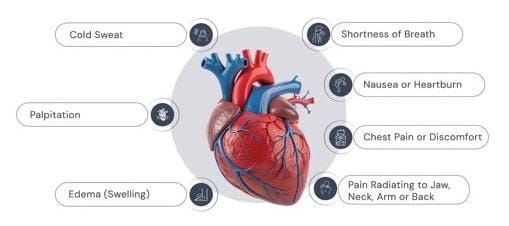
Heart Disease Symptoms Caused by Arrhythmia
Arrhythmia-linked heart disease symptoms may include:
- Fluttering in the chest
- Too fast or too slow heartbeat
- Chest Pain or discomfort
- Dizziness, lightheadedness, or fainting
- Breathlessness
Heart Disease Symptoms Caused by Congenital Defects
If heart disease is present at birth, symptoms can vary in children and adults. Children may experience:
- Blue or grey skin
- Breathlessness during feeding
- Swelling in the legs and abdomen, or puffiness around the eyes
Adults may experience the following signs of heart disease:
- Shortness of breath, even with mild physical activity or exercise.
- Feeling exhausted during exercise
- Swelling in the hands, ankles, or feet
Symptoms Caused by Cardiomyopathy
If the heart disease is due to cardiomyopathy, the following symptoms may appear:
- Fatigue
- Dizziness or lightheadedness
- Fainting
- Swollen legs, ankles, or feet
- Shortness of breath
- Fluttering or pounding heartbeats
Symptoms Caused by Heart Valve Disease
The narrowing (stenosis) or blocked (regurgitation) heart valve may cause the following symptoms:
- Fatigue
- Chest pain
- Fainting
- Irregular heartbeat
- Shortness of breath
- Swollen feet or ankles
Heart Problem Symptoms in Females
Women experience subtler heart disease symptoms more frequently than men, and their symptoms may vary slightly. Instead of usual chest pain, women often feel the following symptoms:
- Extreme lethargy
- Sleep disturbances
- Breathlessness
- Nausea
Facial Signs of Heart Problems
- Blue lips (Cyanosis)
- Pale or grey skin
- Yellow cholesterol deposits around the eyes, known as Xanthelasma
- Facial edema – swelling or puffiness
- Retinal vascular changes, such as narrowing or irregularities in the blood vessels
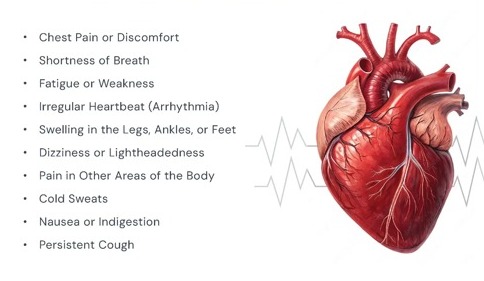
9 Early Warning Signs of Heart Disease That Are Worth Tracking
Here are the 10 heart disease warning signs that may require immediate medical attention.
Chest Pain, Discomfort, or Pressure
Chest discomfort, pressure, tightness, or a squeezing sensation are signs that people often confuse with indigestion, stress, and fatigue. A heart attack may feel like a heaviness, tightness, or pressure.
If your chest pain or discomfort stops after a few minutes of resting, it can be an indication of angina. However, if the signs don’t disappear after resting or get worse in a few minutes, dial 999 and get an ambulance as soon as possible.
Stomach Pain Like Indigestion
A painful or burning feeling in your chest or stomach can be an indication of a heart attack. Some people confuse these symptoms with indigestion. The feeling may seem the same because the heart, the stomach, and the gullet all lie next to each other. If you’re having severe pain in your chest or around the stomach area and it’s getting worse, call NHS 111 for advice.
Arm, Jaw, or Back Pain
In a heart attack, pain doesn’t appear only in the chest area, but spreads to other parts of your body, including your arm, jaw, neck, or back. If you feel such symptoms, especially pain in your left arm or into your neck, and it doesn’t go away, call 999 for an ambulance.
Sweating
Feeling sweaty without an obvious reason, such as hot weather, workout, etc., that accompanies chest discomfort, may be an indication of a heart attack. If the symptoms don’t settle down in a few minutes or get worse, call 999 for an ambulance.
Shortness of Breath
Breathlessness can appear with or without chest pain. It may be a sign that your heart is struggling to keep pace with your body’s oxygen demand.
Extreme Fatigue
This isn’t the ordinary tiredness that a full night’s sleep can easily fix by morning. Fatigue that lingers for days beyond your actual activity level is worth discussing with a doctor.
Severe Palpitations
A heartbeat that suddenly races, flutters, or skips a beat can feel unsettling even when it only lasts seconds. Caffeine, stress, or a poor night’s sleep can cause palpitations. Frequent episodes may point toward an underlying rhythm problem that is worth investigating with your GP.
Swollen Ankles or Legs
Swelling in ankles can be due to multiple reasons, and heart disease is one of the most possible causes. Tight shoes and deep sock lines pressing into your skin can be the first noticeable clue. It may indicate that your heart is not pumping blood efficiently around the body, causing fluid buildup in your lower limbs. This sign is one of the most common clues of heart disease that is worth discussing with your doctor at the earliest.
Dizziness or Lightheadedness
Feeling briefly dizzy after standing up too quickly happens to almost everyone from time to time. A heart that can’t maintain a steady blood supply to your brain produces that same sensation, but far more often. Repeated episodes suggest a rhythm or blood pressure issue that genuinely deserves a proper check.
How Heart Disease Symptoms Differ in Men and Women?
Women with heart disease are more likely to experience fatigue, nausea, jaw or back pain, and breathlessness, more than chest pain. However, these symptoms are mostly attributed to anxiety, indigestion, and fatigue, causing treatment to be delayed for weeks or even months.
Three women die of coronary heart disease every single hour in the UK, and many of them due to a heart attack. Chest pain, breathlessness, sweating, or nausea deserve the same urgency regardless of gender.
According to the British Heart Foundation, women having heart attacks show largely the same core symptoms as men, including chest pain, breathlessness, and pain spreading to the arm or jaw. Labeling women’s classic symptoms as atypical may actually be part of why their diagnosis and treatment get delayed.
| Symptoms | Men | Women |
| Chest Pain | Most common symptom | Most common symptom, but may be less intense or absent |
| Pain radiating to the left arm | Common | Less common |
| Shortness of breath | Common | Common |
| Pian in the jaw, neck, or throat | Less common | More common |
| Back pain | Less common | More common |
| Shoulder pain | Common | Common |
| Nausea or Vomiting | Less common | More common |
| Unusual Fatigue | May occur | Very common, sometimes lasts for days or weeks before a cardiac event |
| Cold Sweats | Common | Common |
| Palpitations | Can occur | Can occur |
| Swelling in the legs, ankles, or feet | Common in heart failure | Common in heart failure |
Which Heart Symptoms Require Emergency Care?
If you are experiencing one or more of these warning signals, don’t wait and call an emergency immediately. Remember, every minute of delayed care can cause long-term complications.
- Sudden, severe chest pain or pressure that doesn’t get better with rest.
- Chest pain spreading rapidly to the arm, jaw, or neck
- Breathlessness
- Fainting or collapse
- Cold sweat along with chest discomfort
Who is at Higher Risk of Developing Heart Problems?
- High blood pressure and high cholesterol both can damage your artery walls, often without producing a single symptom.
- Diabetes can compound the underlying damage further, and the relative risk climbs even higher for women with the condition.
- Smoking, a sedentary lifestyle, and drinking more than 14 units of alcohol can all add further strain.
- A family history of heart disease may raise your own baseline risk, even if your current lifestyle looks perfectly healthy.
- Age above 40, particularly for men
Effect of Vaping on Heart Health
Listen to Your Heart and Get Expert Care
A heart disease symptom that keeps returning or gradually gets worse must be properly investigated. If you experience any of these symptoms, especially if they are persistent or worsening, don’t wait for complications to develop. Consult a good cardiologist near you and get expert heart health advice.
If you’re in London, you can schedule your cardiology appointment at The National Heart Clinic and receive specialist-led care with comprehensive, same-day diagnostics and a personalised care plan. Visit the clinic at Harley Street, or book a consultation online.
Disclaimer
The information provided in this blog is for general information and educational purposes only. The content is not intended to be a substitute for professional medical advice, diagnosis, or treatment. Always seek the advice of your GP or a qualified medical professional regarding any medical condition. If you are experiencing a medical emergency, please contact emergency services immediately.