Exercise-Induced Heart Problems: Warning Signs Every Athlete Should Know
“For any athlete, one of the most powerful performance investments is a heart that has been properly assessed and protected for the long term, says Dr. Francesco Lo Monaco, Consultant Cardiologist at The National Heart Clinic.”
Moderate exercise is generally considered safe for most people, but it can pose risks for those with certain underlying health conditions. Just 30 minutes of moderate activity a day, such as brisk walking, swimming, or cycling, is usually recommended to improve cardiac wellbeing and reduce the risk of long-term complications.
Despite these benefits, exercise can sometimes trigger complications in people with an existing heart condition or undiagnosed symptoms. Chest pain, pressure, or breathlessness during physical exertion are common warning signs of exercise-induced heart problems, and should never be ignored. If you experience any of these symptoms, it’s important to consult a cardiologist for a thorough evaluation.
Can Exercise Sometimes Turn Risky?
Regular exercise generally improves your cardiovascular fitness and reduces long-term complications. However, athletes who train intensely for years often develop what’s known as an athlete’s heart, where the heart muscle enlarges slightly and adapts to handle a heavier workload. This adaptation is usually normal and reversible.
Problems arise when high-intensity exercise interacts with an undiagnosed heart condition a person doesn’t know about. Also, strenuous physical activity can trigger a heart rhythm disturbance in someone with an underlying cardiovascular issue. That’s the reason understanding the specific conditions causing these events is just as important as recognising the symptoms themselves.
How Much Exercise is Enough for Heart Health? Expert Insights
“You don’t need to spend hours in the gym; just 2 strength training sessions each week and 150 minutes of moderate activity, 75 minutes of vigorous activity, or a mix of the two per week are fine to maintain your heart health, says Dr Francesco Lo Monaco.”
Cardiac Symptoms During Exercise and Warning Signs: When to be Concerned?
Chest Pain or Pressure During Activity
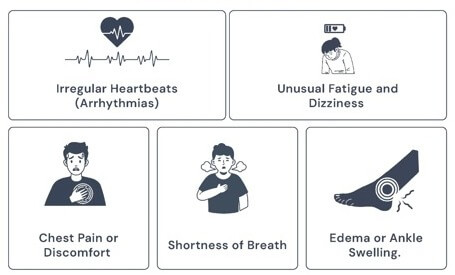
Chest pain during exercise that feels like mild to heavy pressure, or tightness and spreads into your left arm, jaw, or back, can be a sign of a heart attack or a serious cardiac concern. Stopping activity immediately is essential, particularly if the symptoms worsen in a few moments.
Extreme Breathlessness
Though everyone experiences breathlessness during intense activity, that arrives suddenly, or far earlier than your usual threshold, can be a red flag and worth discussing with your cardiologist.
Dizziness, Lightheadedness, or Fainting
Dizziness that leads to actual fainting, or repeated lightheaded episodes during training, may point toward a drop in blood pressure or an underlying rhythm problem. Frequent fainting episodes during exercise should be discussed with your doctor at the earliest.
Palpitations or Irregular Heart Rhythm
An irregular heartbeat during a workout may be an indication of an underlying heart problem. Palpitations paired with dizziness or chest discomfort need urgent medical attention.
Unusual Fatigue
Unusual fatigue that doesn’t disappear even after the end of your workout session can be a signal worth taking seriously and discussing with a cardiologist right away.
Decline in Performance or Slow Recovery
A sudden unexplained drop in performance despite consistent training is a warning sign worth noticing. Also, a resting heart rate that won’t settle back after training ends is another alarming signal.
How an Exercise Tolerance Test Can Help Make a Reliable Diagnosis?
An Exercise Tolerance Test (ETT), also known as a cardiac stress test, is one of the most effective ways to evaluate how your heart performs under physical exertion. During the test, you cycle on a bike while your heart rate, blood pressure, and ECG readings are continuously monitored. It helps your cardiologist to observe how your heart responds as intensity increases.
For athletes, an ETT can help detect underlying conditions such as coronary artery disease, abnormal heart rhythms, or reduced blood flow that may only surface during physical activity. It’s particularly valuable for anyone experiencing symptoms like chest discomfort, breathlessness, or unusual fatigue during exercise, as it helps distinguish between normal exertion and a genuine cardiac concern.
Book an Exercise Tolerance Test
Common Conditions That Can Cause Exercise-Induced Heart Problems
Though exercise is one of the most powerful tools for longevity and cardiovascular protection, sometimes, underlying heart conditions can cause heart-related complications induced by exercise. Some might be genetic, while others build up slowly over years. We have listed here a few common cardiac conditions that can cause heart problems.
Inherited Cardiomyopathy
Inherited cardiomyopathy is a genetic condition where the heart walls grow thick. It is one of the leading causes of sudden deaths in young athletes. Many people carrying this condition may have no prior symptoms before a serious event occurs.
Chest Pain or Pressure During Activity
Chest pain during exercise that feels like mild to heavy pressure, or tightness and spreads into your left arm, jaw, or back, can be a sign of a heart attack or a serious cardiac concern. Stopping activity immediately is essential, particularly if the symptoms worsen in a few moments.
Coronary Artery Disease
Athletes over 35 face a different risk profile than younger competitors, and narrowed coronary arteries may become the more likely culprit behind exercise-induced events. Years of unmanaged cholesterol can narrow the arteries, causing CAD and potentially leading to a heart attack.
Atrial Fibrillation in Endurance Athletes
Long-term and extensive endurance training can be linked to a higher rate of atrial fibrillation in middle-aged and older athletes. The exact mechanism isn’t fully understood, but years of intense endurance workouts can change the heart’s electrical activity over time, leading to serious cardiac risks.
Learn More About Cardiac Conditions
Risk Factors for Exercise-Induced Heart Problems
Metabolic Risk Factors
- High blood pressure
- High cholesterol, including lipoprotein(a)
- Insulin resistance despite a lean body
- Chronic inflammation from stress, poor sleep, autoimmune disease, or excessive training
Electrical Issues
- Atrial fibrillation
- Ventricular arrhythmias (dangerous abnormal heart rhythms from the lower chambers)
- Myocardial fibrosis (heart scarring)
When to Seek Immediate Medical Attention?
If you experience chest pain, fainting, or severe unexplained breathlessness during exercise, it’s important to stop activity immediately and seek urgent medical attention, especially if these symptoms appear frequently and are worsening over time.
Consult our cardiology experts
Conclusion
Noticing your symptoms while exercising and getting your heart evaluated when something feels off can turn a silent risk into a manageable diagnosis. If you’re experiencing any of these signs, don’t wait for the symptoms to escalate. Book a cardiology consultation at the National Heart Clinic; online consultations are also available for your convenience. Schedule your appointment now!
Disclaimer
The information provided in this blog is for general information and educational purposes only. The content is not intended to be a substitute for professional medical advice, diagnosis, or treatment. Always seek the advice of your GP or a qualified medical professional regarding any medical condition. If you are experiencing a medical emergency, please contact emergency services immediately.