What to Expect at Your Private Cardiology Appointment
If you are visiting a cardiologist for the first time or planning a follow-up appointment, it is normal to feel anxious. What should you wear? How should you prepare for your consultation? What documents should you bring? What if your doctor identifies something serious about your health? What cardiac tests might they recommend? These are common questions that may come to mind before your appointment.
However, a cardiologist appointment does not have to be stressful. It usually involves a physical examination, a detailed discussion of your heart-related symptoms or concerns, and a review of your medical or family history. Understanding what to expect during a private cardiology appointment can help put your mind at ease and prepare you for your first or follow-up visit.
Don’t Wait Weeks for Answers
Get fast, specialist-led heart checks with same-day or quick appointments
Why Might You Need a Private Cardiology Assessment?
You do not always need to have symptoms or existing cardiac concerns to see a cardiologist. You can book an appointment even if you feel healthy and have no noticeable symptoms. You can also visit a private cardiology clinic to discuss your heart-related symptoms, family history, or abnormal test results.
People usually visit heart specialists when experiencing symptoms, such as chest pain, breathlessness, dizziness or blackouts, palpitations, or a heart murmur. A cardiologist’s assessment is especially useful when symptoms persist, become more frequent, or require further investigation and interpretation in the context of your overall health.
Also Read: Choosing Between NHS and Private Healthcare
What Should You Bring to Your Cardiology Appointment?
- Your GP referral, insurance details, and authorisation code, if applicable. Referral requirements vary between private healthcare providers, so contact the clinic beforehand if you are unsure.
- Your current prescription, including medicine names, dosages, and any supplements you take.
- Your previous cardiac test reports, if available
- Your family medical history, especially if a close relative has had heart disease or congenital cardiovascular conditions.
- A brief note about your symptoms, including their frequency, duration, and possible triggers.
- Home blood pressure readings, if available or relevant to your consultation.
How to Pay For Your Private Care
What to Expect At Your Private Cardiology Appointment?
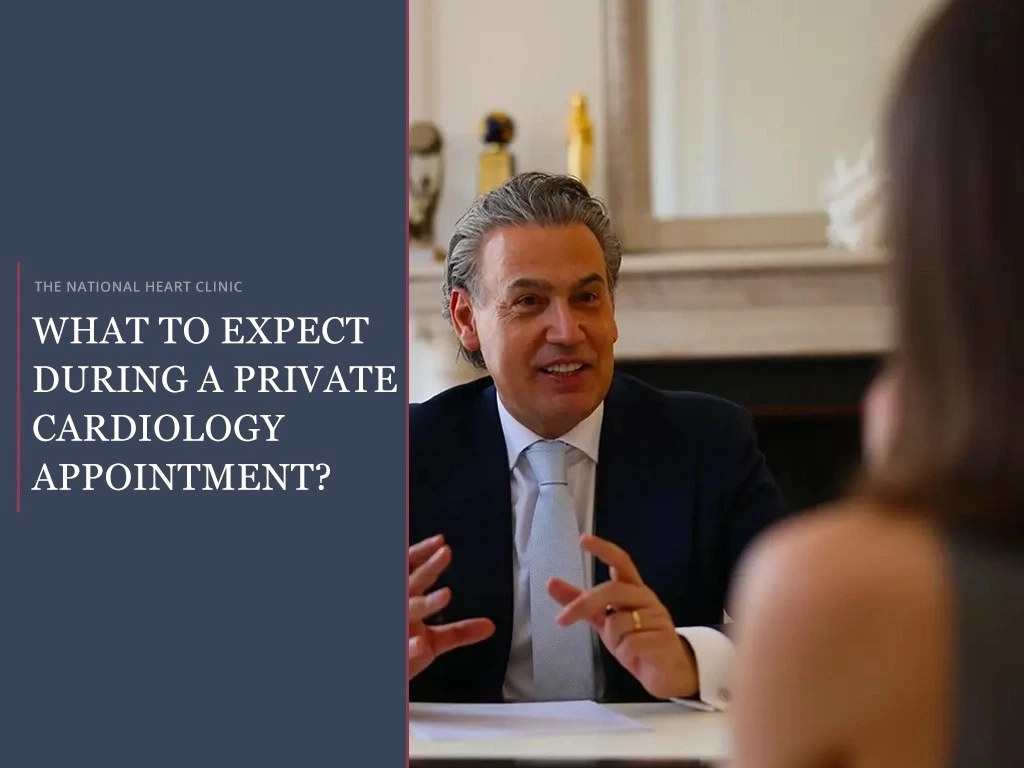
During your consultation, your cardiologist will perform a physical examination and ask about your symptoms, medical concerns and reasons for seeking an assessment. They may measure your blood pressure, check your heart rate and listen to your heart sounds using a stethoscope. Your cardiologist will also review your medical and family history to gain a better understanding of your overall cardiovascular health and identify any potential risk factors.
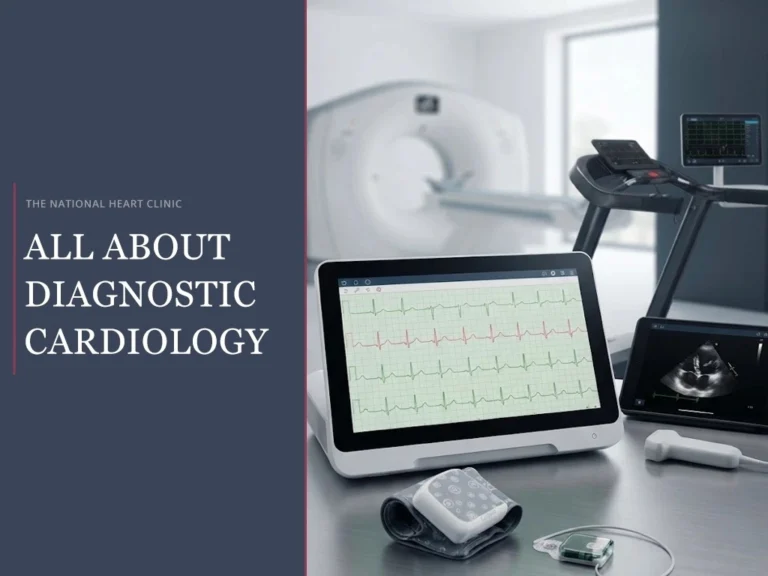
After an initial heart check-up, your cardiologist may recommend some tests, where clinically appropriate. Common diagnostics include an ECG, a heart ultrasound, continuous ECG monitoring, or 24-hour blood pressure monitoring. More advanced imaging and scans, such as cardiac CT scan or MRI, may also be recommended when detailed information about your heart is needed.
What Details Should You Share With Your Cardiologist?
It’s common to forget important details when discussing your health during a medical appointment. Preparing a short list of points beforehand can help ensure that you cover everything relevant to your symptoms and concerns.
Here is what you should share with your cardiologist for a comprehensive and accurate diagnosis:
- Your Symptoms: Explain what you are experiencing, when the symptoms first appeared, and how frequently and severely they occur.
- Possible Triggers: Mention whether anything brings on your symptoms, such as certain foods, physical activity, stress or other factors.
- Family History: Share any family history of heart disease, including inherited heart conditions, congenital heart defects or sudden cardiac death at a young age.
- Your lifestyle: Discuss your diet, physical activity, smoking or alcohol habits, and any recent lifestyle changes.
- Medication and Previous Investigation: Provide details of your current medication, previous cardiac test results and blood pressure readings.
How Long Does Your Private Cardiology Appointment Take?
The duration of your cardiology appointment depends on the symptoms or concerns being assessed, the investigations required and the time needed to review your results. Your cardiologist will take the time necessary to understand your medical history, discuss your concerns and recommend an appropriate course of action.
Will My Cardiologist Necessarily Do a Heart Test?
Your cardiologist will not necessarily recommend cardiac tests at every appointment. Further investigations are advised when clinically appropriate and when they can provide useful information about your heart health or help investigate specific symptoms.
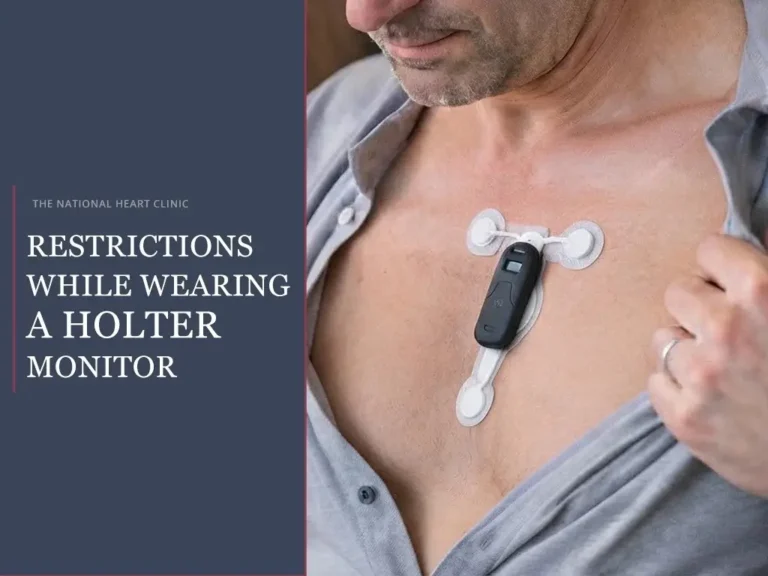
Common tests include an electrocardiogram (ECG), an echocardiogram (heart ultrasound), ambulatory blood pressure monitoring (ABPM) and ambulatory ECG monitoring, such as a Holter monitor.
More specialised investigations, including a coronary angiogram, may be recommended if initial assessments or test results indicate a need for further investigation of the coronary arteries.
Learn About Diagnostic Cardiology in the UK
What Can You Expect After Your Cardiology Assessment?
Following your consultation and initial assessment, your cardiologist will discuss their findings and recommend the next steps based on your symptoms, medical history and examination results. Depending on your individual needs, this may include:
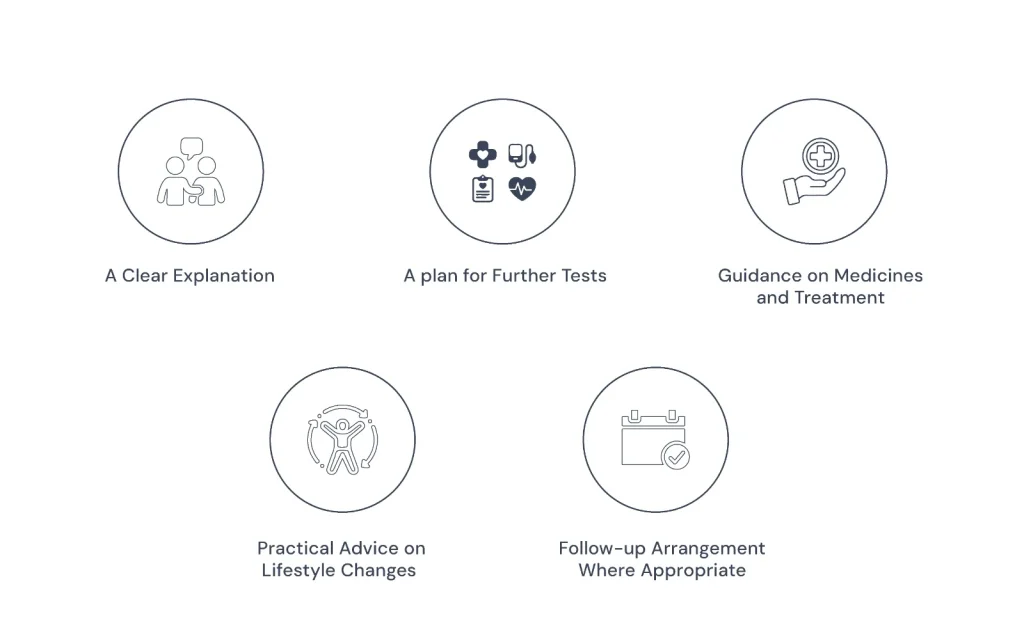
- An explanation of your symptoms, clinical findings and any identified cardiac concerns.
- Recommendations for additional investigations, such as an ECG, echocardiogram or cardiac imaging, where clinically appropriate.
- Advice on medication, treatment options and any changes required to manage your heart health.
- Recommendations regarding diet, physical activity and other lifestyle factors that may help improve your cardiovascular health.
- A follow-up consultation, where appropriate, to review test results, discuss progress and determine any further steps.
When to Seek Emergency Care?
A routine private cardiology appointment is not a substitute for emergency medical care. If you experience severe or persistent chest pain, significant breathlessness, nausea associated with chest discomfort, or loss of consciousness, do not wait for your scheduled appointment.
Call 999 immediately if you suspect a heart attack or experience symptoms that could indicate another serious cardiac emergency. Prompt medical attention helps prevent potential cardiovascular complications.
Conclusion
In a private cardiology appointment, you can discuss your symptoms with your cardiologist, address concerns about your heart health, and receive specialist advice. Preparing your medical records and noting down any symptoms beforehand can help you make the most of your consultation.
Whether you are experiencing cardiac symptoms, have a family history of cardiovascular disease, or simply want a specialist assessment of your heart health, The National Heart Clinic provides consultant-led cardiology care at its clinics in Harley Street, London, and Richmond.
Book a private cardiology appointment with our experienced cardiologists to discuss your concerns and receive personalised advice and recommendations for your heart health. Online consultations are also available for patients across the UK.
Disclaimer
The information provided in this blog is for general information and educational purposes only. The content is not intended to be a substitute for professional medical advice, diagnosis, or treatment. Always seek the advice of your GP or a qualified medical professional regarding any medical condition. If you are experiencing a medical emergency, please contact emergency services immediately.
Share with Others: