Restrictions While Wearing a Holter Monitor: A Complete Guide
Are you experiencing palpitations, irregular heart rhythm, dizziness, shortness of breath, or fainting, yet your ECG says everything is normal? The reason: a standard ECG only captures a few minutes of the heart’s electrical activity, which might miss the episodic rhythm irregularities. This is where a Holter Monitor works by continuously tracking your heart rhythm for a set period of 24 hours to 14 days, depending on your doctor’s recommendation.
However, to get accurate results, you’ll need to follow a few restrictions while wearing a Holter Monitor. Here we explain these precautions in detail to help you make your ECG monitoring more reliable.
Monitor Your Heart Rhythm
Monitor your heart rhythm over 24 hours to 14 days with specialist-led ambulatory ECG monitoring. Home monitoring options are also available where clinically appropriate.
What is an ECG Holter Monitor?
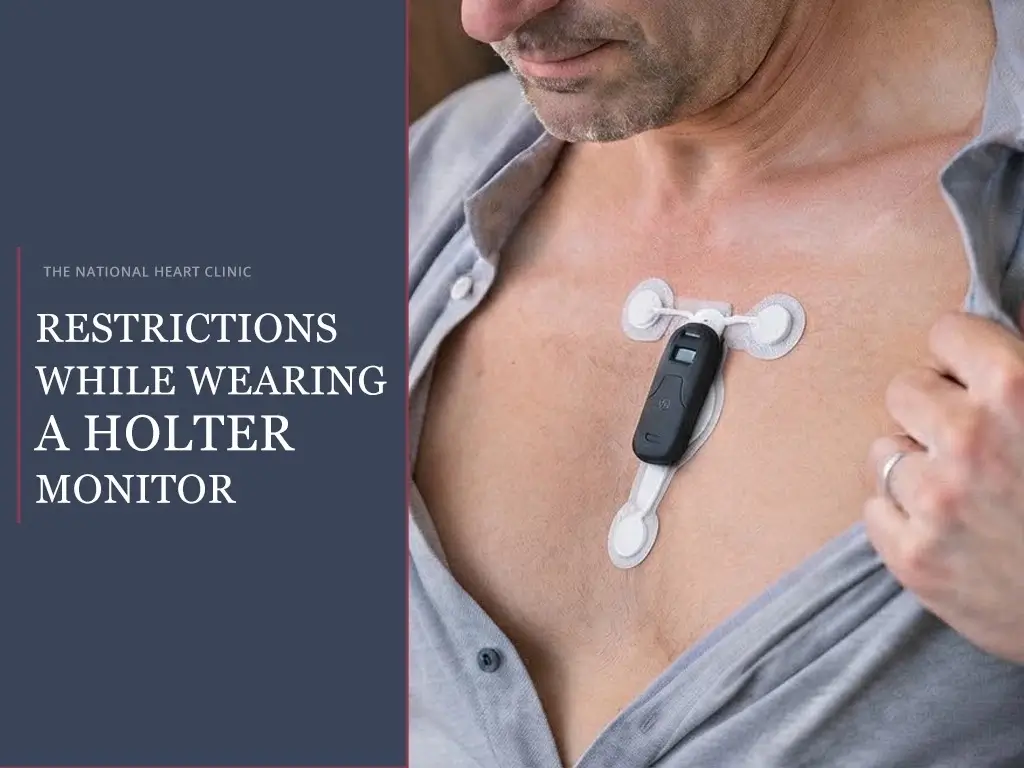
An ECG Holter monitor is a small (usually the size of a deck of playing cards) and lightweight device that operates on battery power. It records your heart’s electrical activity while you go about your daily routine activities and also when you sleep. The device is named after Dr Norman J. Holter, who developed the device for the first time. Modern Holter monitors are much smaller and more comfortable than earlier devices.
How Does It Work?
A Holter monitor provides continuous ECG recording over an extended period compared to a standard electrocardiogram. It helps detect unusual and intermittent symptoms that often can not be detected in a routine ECG test. Your cardiologist may recommend Holter monitoring to investigate:
- Palpitations
- Irregular heartbeat
- Arrhythmias
- Dizziness or light-headedness
- Unexplained fainting
- How your heart rhythm responds to certain treatments
Depending on your symptoms and what your cardiologist needs to investigate, the monitoring period may last for 24 hours, 48 hours, or several days – up to 2 weeks.
Restrictions While Wearing a Holter Monitor: What Not to Do?
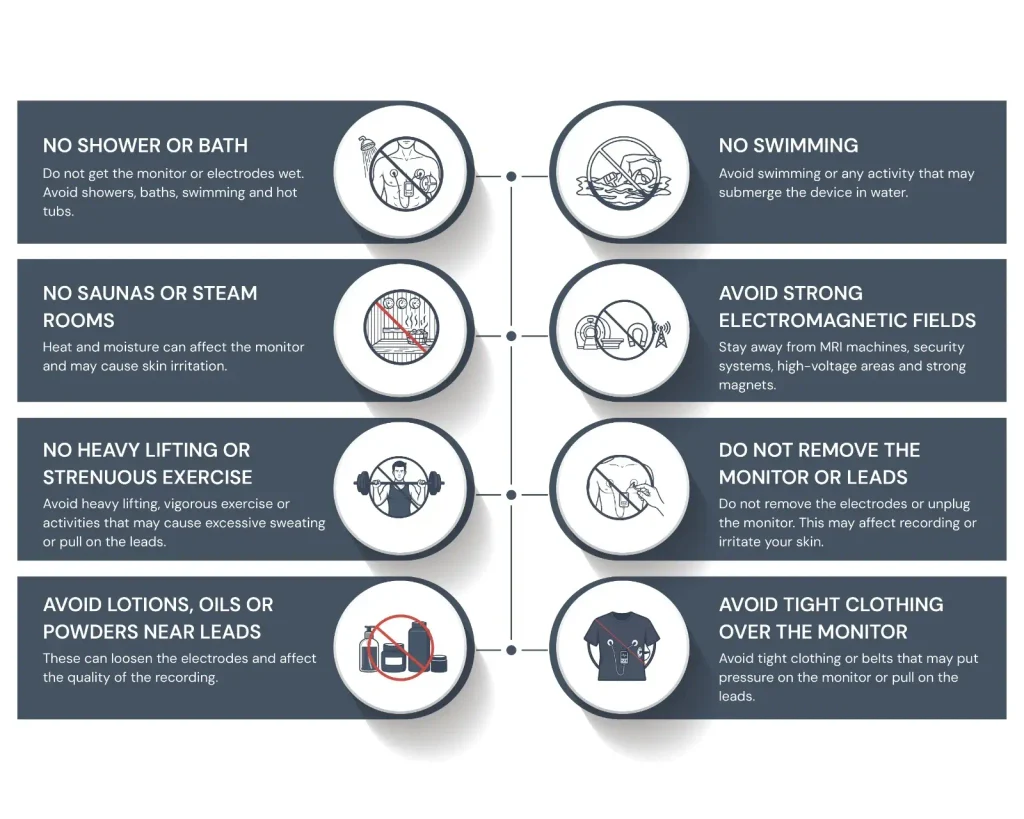
Although modern Holters are much more comfortable to wear, some precautions must still be followed to get accurate results. Your exact instructions may vary depending on the type of device you are using. Therefore, always follow the guidance provided by your clinic. Here are important do’s and don’ts to consider while wearing the Holter device:
Keep the Holter Dry
Keeping the device dry is one of the most critical requirements for expecting accurate results from a Holter Monitor. Nowadays, modern Holter devices are often showerproof; however, swimming or full water submersion is usually not recommended while wearing the device.
The National Heart Clinic offers showerproof Holter monitors for different durations based on your symptoms and clinical needs. Remote cardiac monitoring may also be available where clinically appropriate to have the device delivered to your home.
Wear Loose and Comfortable Clothing
Choose loose and comfortable clothing while wearing a Holter monitor. Tight clothing may rub against the electrodes or make the monitor uncomfortable to wear. Women can usually continue wearing a bra. A non-wired or sports bra is considered more comfortable and helps avoid pressure on the electrodes.
Apply Deodorants Carefully
Deodorants are usually allowed while wearing a Holter monitor. The important thing to consider is where and how to apply it on the skin. Cardiologists suggest applying deodorants carefully around the areas where the electrodes are attached, making sure to avoid the area nearby electrodes.
Keep Mobiles at a Safe Distance
Can I use my mobile phone while wearing a Holter monitor? This is a common question among patients undergoing ambulatory ECG monitoring. The simple answer is yes. You can usually use your mobile phone while wearing a Holter monitor. However, it is best to avoid keeping your phone close to the monitor for long periods.
Limit use to when it is necessary and keep your phone at least 6 inches away from the device where possible. It can help reduce the risk of interference with the ECG recording. You should always follow the specific instructions provided by your clinic or the manufacturer of your Holter monitor.
Sleep With Care
You can usually sleep normally while wearing a Holter monitor. Try to sleep on your back or side in a position that does not put pressure on the device. If your symptoms occur while you are sleeping, note the time and any symptoms you experience. It can help your cardiologist compare them with your ECG recording.
Instructions for X-ray While Wearing a Holter
Tell the healthcare professional that you are wearing a Holter monitor before having an X-ray or other imaging procedure. You may be asked to remove the monitor during the procedure depending on the type of equipment being used. Do not remove or disconnect the device yourself unless you have been instructed to do so.
Stay Away From Magnets and Metal Detectors
Avoid passing through metal detectors or being near strong magnets while wearing an ambulatory ECG monitor as they contain strong magnetic fields that can interfere with signal transmission and disturb the recording of the heart’s electrical activity.
To ensure reliable reports, it is important to avoid magnets, security scanners, meta detection systems while wearing this heart monitor. If you are attending an appointment for an MRI scan or another procedure involving strong magnetic fields, tell the healthcare team that you are wearing a heart monitor.
Avoid Intense Physical Activity and Heavy Sweating
Although you can continue your routine activities and mild exercise, avoiding intense physical activity or exercise is usually recommended while wearing a Holter. This is because strenuous exercise may cause excessive sweating and loosen the electrodes. It is important to follow the instructions given with your device rather than stopping all physical activity unnecessarily.
Avoid Caffeine, Smoking, and Alcohol
Caffeine, alcohol and smoking can affect your heart rate and may trigger palpitations or other symptoms in some people. Therefore, it is recommended to avoid alcohol during the monitoring period and reduce smoking and caffeine intake to ensure accuracy of your results.
If you notice symptoms after smoking or consuming caffeine, record the time and your symptoms in your diary. It can help your cardiologist compare them with your ECG recording.
Don’t Use High Power Electronics
Modern Holter monitors are designed to be used during normal daily life. Ordinary household appliances generally do not need to be avoided. However, close contact with high-power electrical devices can disrupt the recording and may cause inaccurate readings.
Follow the instructions supplied with your specific device. If your clinic has advised you to keep the monitor away from particular electrical equipment, follow that guidance throughout the monitoring period.
How Long Should You Wear an ECG Holter?
The right monitoring period depends on your symptoms and their frequency. A 24-hour Holter monitor is usually suitable for mild, infrequent symptoms. For severe or more frequent symptoms, your cardiologist may recommend extended monitoring, ranging from several days to up to 14 days to capture hidden, episodic heart rhythm irregularities. Longer monitoring can be particularly useful when symptoms are unpredictable or occur only occasionally. Your cardiologist will consider your symptoms, medical history and previous ECG results when deciding how long you should wear the monitor.
Choosing the Right Holter Monitor
Some advanced Holter monitors, such as C3+ Holter monitors, provide detailed and reliable ECG recording over extended periods. They are designed to be waterproof and can usually be worn during a short shower. However, it is best to remove the device before swimming or taking a bath.
At The National Heart Clinic, Holter monitoring can be arranged using different device options based on your symptoms and monitoring needs. Your cardiologist will recommend the most suitable monitor and provide clear instructions on how to wear and care for it. With our remote cardiac diagnostics facility, suitable patients can also have their Holter monitor delivered to their home, making cardiac monitoring more convenient without the need for repeated clinic visits.
Once the monitoring period is complete, you will return the device along with details of any symptoms you experienced. Your cardiologist will then review the recordings and explain the results to you.
Get Extended ECG Monitoring for Reliable Insights
A Holter monitor can help identify heart rhythm changes that may not appear during a standard ECG. Following usage instructions appropriately can help ensure reliable recordings throughout the monitoring period. The National Heart Clinic offers Holter monitoring with flexible options, including remote cardiac diagnostics for suitable patients. If you have recurring palpitations, dizziness or an irregular heartbeat, book a cardiology consultation to discuss whether Holter monitoring is right for you.
Disclaimer
The information provided in this blog is for general information and educational purposes only. The content is not intended to be a substitute for professional medical advice, diagnosis, or treatment. Always seek the advice of your GP or a qualified medical professional regarding any medical condition. If you are experiencing a medical emergency, please contact emergency services immediately.