Diagnostic Cardiology in the UK: Heart Tests and Cardiovascular Screening Explained (2026)
Diagnostic cardiology is the branch of medicine focused on identifying heart and circulatory conditions through structured clinical testing. In the UK, around 8 million people live with heart and circulatory disease, so detecting cardiovascular risks early through a heart health check or medical tests can help prevent serious conditions such as heart attacks, strokes, and heart failure.
This guide explains how diagnostic cardiology works, the main heart tests used in the NHS and private healthcare, who may need them, and what each test can show.
Don’t Wait Weeks for Answers
Get fast, specialist-led heart checks with same-day or quick appointments
What Is Diagnostic Cardiology?
Diagnostic cardiology is a specialist area of medicine that focuses on finding heart and blood vessel problems through medical tests, scans, and monitoring. These tests help doctors understand how the heart is working and identify possible heart conditions. According to the British Heart Foundation, heart and circulatory diseases cause more than a quarter of all deaths in the UK, which makes early and accurate diagnosis very important.
Why Are Heart Diagnostic Tests Ordered?
Doctors may recommend heart tests when a patient has symptoms such as chest pain, a fast or irregular heartbeat, shortness of breath, or dizziness. These tests may also be used for regular heart checks, especially for people with high blood pressure, high cholesterol, diabetes, or a family history of heart disease.
Symptoms alone cannot always confirm a heart problem. Cardiac diagnostic tests provide clear and measurable information that helps doctors make the right diagnosis and decide on the most suitable treatment.
Who Should Consider Cardiac Screening?
Cardiac screening is not usually offered as a routine NHS check for people who have no symptoms unless there is a medical reason or a GP referral. Private cardiology centres may offer direct access to heart screening, with the results reviewed by consultant cardiologists.
Screening may be worth considering for:
- People with risk factors such as high blood pressure, high cholesterol, type 2 diabetes
- Who have a family history of heart disease
- Unexplained, frequent symptoms that can’t be detected with physical examination
- When there is a suspect of congenital heart problems
- To evaluate the effectiveness of ongoing medication or treatment
- To identify the underlying cause of chest pain, palpitations, or breathlessness.
Who Carries Out Cardiac Diagnostics?
Different healthcare professionals are involved in cardiac diagnosis. A consultant cardiologist usually leads the diagnosis and reviews test results. Cardiac physiologists carry out tests such as ECGs, echocardiograms, and heart monitoring. Radiologists interpret CT and MRI scans.
What are Cardiac Diagnostic Tests? Explained for UK Patients
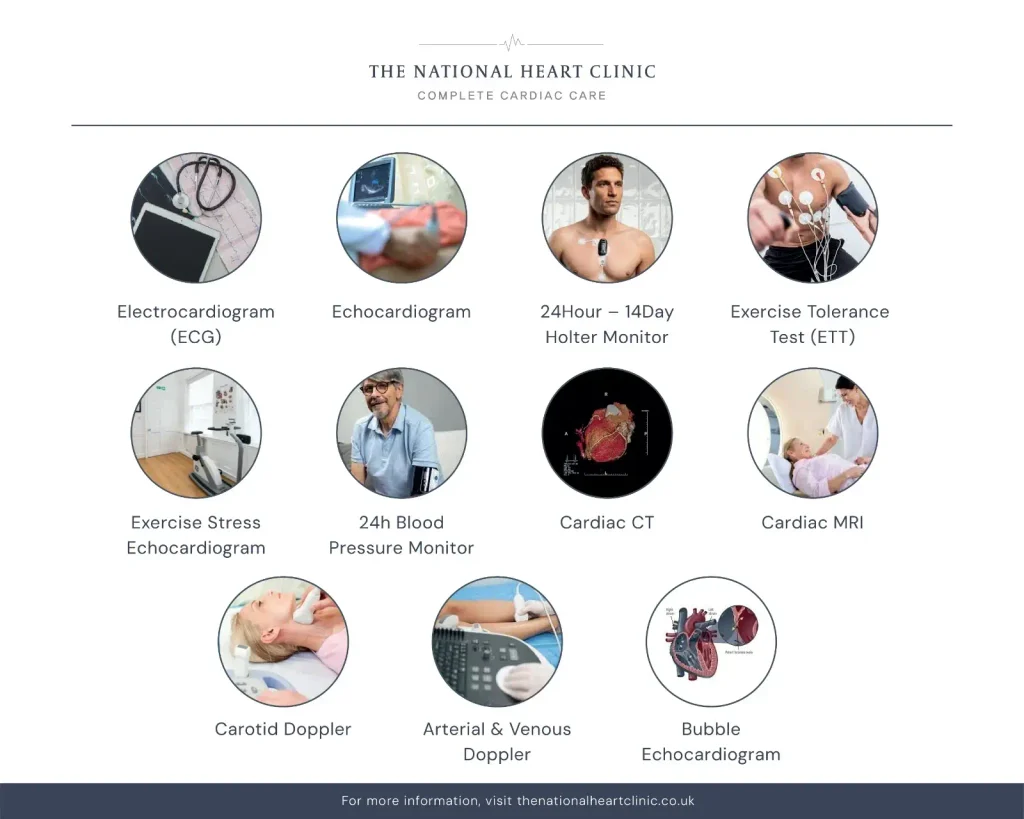
Heart diagnostics include different tests and scans that help assess heart health, such as rhythm, structure, and function. The results of these tests may help doctors to identify heart conditions early and guide the most appropriate treatment plan. Commonly, doctors may recommend one or more of the following heart tests to evaluate your cardiac health.
Electrocardiogram (ECG)
An electrocardiogram, or ECG, is a simple test that records the heart’s electrical activity. Small electrodes are placed on the chest, wrists, and ankles to record the heart’s rhythm. The test is painless and usually takes around five to ten minutes. It is one of the most common tests used to check heart health in the UK.
Types of Electrocardiograms
- Resting ECG: A resting ECG records the heart’s activity while you lie still. It can help detect abnormal heart rhythms, conduction problems (such as heart block), and signs of a previous heart attack.
- Exercise ECG (Stress Test): An exercise ECG, also known as a stress test or treadmill test, records your heart’s activity while you exercise. It shows how the heart responds to physical activity and can help identify heart rhythm problems that may only appear during exercise. It can also provide information about how the heart responds when it needs to work harder.
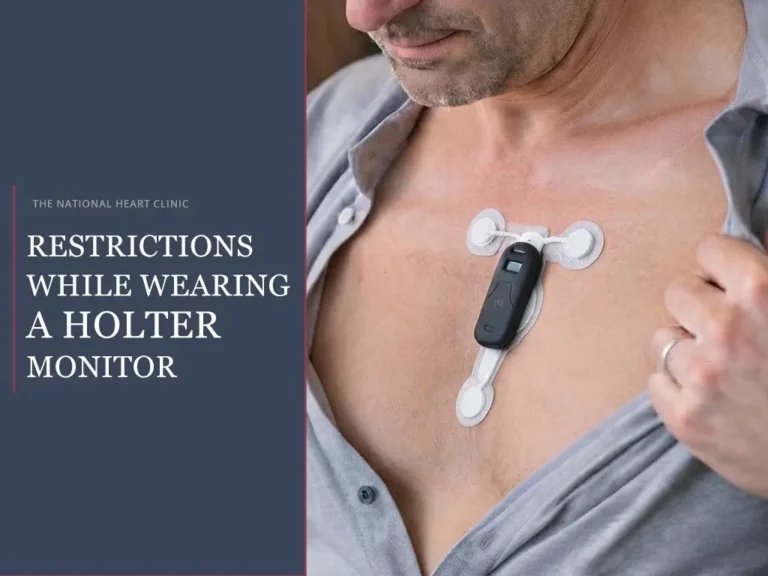
- Holter Monitoring: Ambulatory ECG monitoring using a Holter monitor is a small wearable device that records the heart’s electrical activity while you go about your normal daily routine. It may be worn for 24 hours or longer, sometimes for up to 14 days, to help detect irregular heart rhythms that may not appear during a short ECG at a clinic. The monitoring period is usually chosen based on how often the symptoms occur.
Echocardiogram: Ultrasound Imaging of the Heart
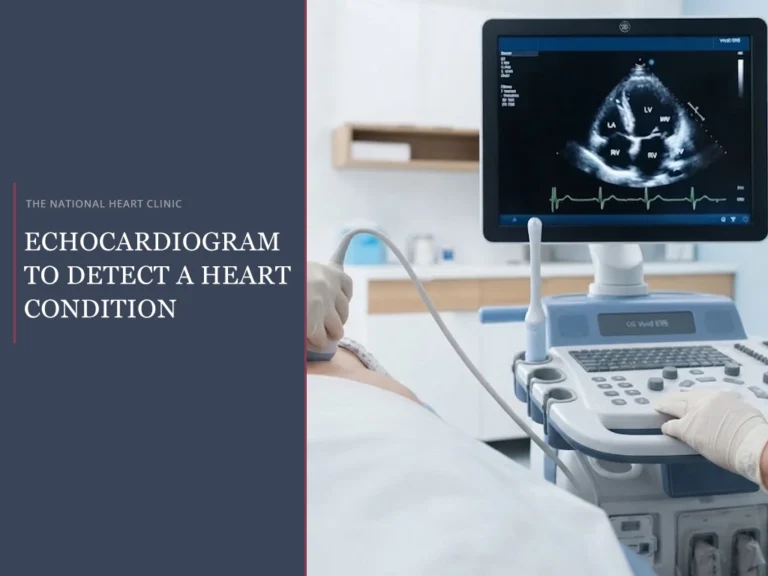
An echocardiogram, often called an ‘echo’, uses high-frequency sound waves to create moving images of the heart. It is a painless and non-invasive test usually carried out by a cardiac physiologist. An echo can show the size of the heart, how well the heart muscle contracts and relaxes, and how the heart valves are working. It provides information that an ECG cannot show.
Types of Echocardiogram
- Transthoracic echocardiogram (TTE): The most common type of echo, where a probe is moved over the chest to produce images of the heart.
- Transoesophageal echocardiogram (TOE): A small probe is passed into the oesophagus to get clearer images of certain parts of the heart.
- Stress echocardiogram: Heart images are taken during or after exercise to see how the heart works when it is under stress.
- Doppler echocardiogram: Measures the speed and direction of blood flow through the heart and its valves.
- Contrast echocardiogram: Uses a contrast agent to make the heart structures easier to see when standard images are not clear enough.
- 3D echocardiogram: Creates three-dimensional images that can help doctors assess more complex heart structures.
Cardiac Imaging: CT, MRI, and Nuclear Scans
Advanced heart imaging tests give doctors a much more detailed view of the heart and blood vessels than an ECG or standard echocardiogram. Three common types of cardiac imaging used in UK cardiology services are:
- Cardiac CT and CT Coronary Angiogram: A cardiac CT is a non-invasive test that uses contrast dye to create detailed images of the heart and coronary arteries. A CT coronary angiogram can show areas where the coronary arteries have become narrowed or blocked. Unlike traditional angiography, it does not require a catheter to be inserted into an artery.
- Cardiovascular MRI (CMR): A cardiovascular MRI uses magnets and radio waves to create detailed images of the heart muscle, valves, and major blood vessels. It can be especially useful when other imaging tests do not provide enough detail. CMR can help doctors identify scarring in the heart muscle after a heart attack, assess conditions such as cardiomyopathy and myocarditis, or examine complex congenital heart conditions.
- Myocardial Perfusion Scan: A myocardial perfusion scan uses a small amount of a radioactive tracer, which is injected into a vein. The scan shows how well blood is reaching the heart muscle. This test may be recommended when an exercise ECG cannot be performed or when doctors need more detailed information about the heart’s blood supply. The amount of radiation used is carefully controlled for medical purposes.
Vascular and Circulation Imaging
These advanced imaging tests are used to assess your circulatory system to detect issues within arteries.
- Cardiopulmonary Exercise Testing (VO₂ max): This test is mostly recommended for athletes. It helps identify potential limits to performance, i. how your body works during exercise.
- Carotid Doppler: This specific ultrasound scan is used to evaluate the carotid arteries, present in the neck, to detect blocked or narrowed arteries that may increase the risk of stroke.
- Abdominal Aorta Ultrasound: This test is used to measure the shape and structure of the aorta – the main blood vessel that carries blood from your heart to the body.
Ambulatory Blood Pressure Monitor
Ambulatory blood pressure monitoring (ABPM) involves wearing a portable BP monitor for 24 hours. The device automatically records blood pressure at regular intervals (usually a 30-minute gap) during the day and night, including while you are asleep. The main advantages of ABPM over a single clinic reading are:
- It continuously records blood pressure readings, helping identify patterns for 24 hours.
- It helps detect White Coat Syndrome (blood pressure rises in a clinical setting).
- It helps detect nocturnal hypertension, which may be linked to a higher risk of cardiovascular problems.
- It helps avoid incorrect diagnosis, as multiple readings in different times of the day can reduce the chance of diagnosing hypertension based on one unusually high reading.
Key Cardiac Blood Tests
Blood tests can help doctors find possible causes of symptoms and check for signs of heart problems. Important tests include troponin, which can help identify heart muscle damage, and natriuretic peptides, which are used when assessing possible heart failure. Doctors may also check cholesterol and lipid levels to assess cardiovascular risk and blood glucose levels to screen for diabetes.
Access Remote Cardiac Diagnostics Across the UK
The National Heart Clinic offers a remote heart diagnostics facility for certain tests, including ECG, echocardiogram, ABPM, and certain blood tests. You can book your diagnostics for home testing and monitoring. Results will be reviewed and interpreted by one of our cardiac specialists. Your cardiologist may recommend a physical examination or follow-up, where necessary, to ensure you receive the best approach to cardiac health.
Book Your Remote Cardiac Diagnostics
Do You Need a Referral for Cardiac Diagnostic Tests in the UK?
Some private cardiology centres offer direct access to cardiac tests without a GP referral, making it easier to seek specialist assessment. The booking process and availability of tests can vary between providers.
At The National Heart Clinic in Harley Street, London, patients can access consultant-led cardiac care and a range of diagnostic tests. Same-day appointments are usually available, depending on the test and appointment availability.
Whether you have noticed concerning symptoms or simply want a proactive heart health assessment, you can book an in-clinic or online cardiology consultation with one of our experienced specialists and discuss lifestyle adjustments and treatment options for your cardiac health.
Conclusion
Don’t leave your cardiac health unattended. If you have concerns about your heart health or would like a proactive cardiac assessment, book a consultation with a cardiology specialist to understand your cardiac health and take appropriate next steps accordingly. Where required, your cardiologist will recommend diagnostics tests to detect the underlying heart problems correctly. Book an appointment today!
Disclaimer
The information provided in this blog is for general information and educational purposes only. The content is not intended to be a substitute for professional medical advice, diagnosis, or treatment. Always seek the advice of your GP or a qualified medical professional regarding any medical condition. If you are experiencing a medical emergency, please contact emergency services immediately.